Automated Escape Rooms: How They Run With No Game Master
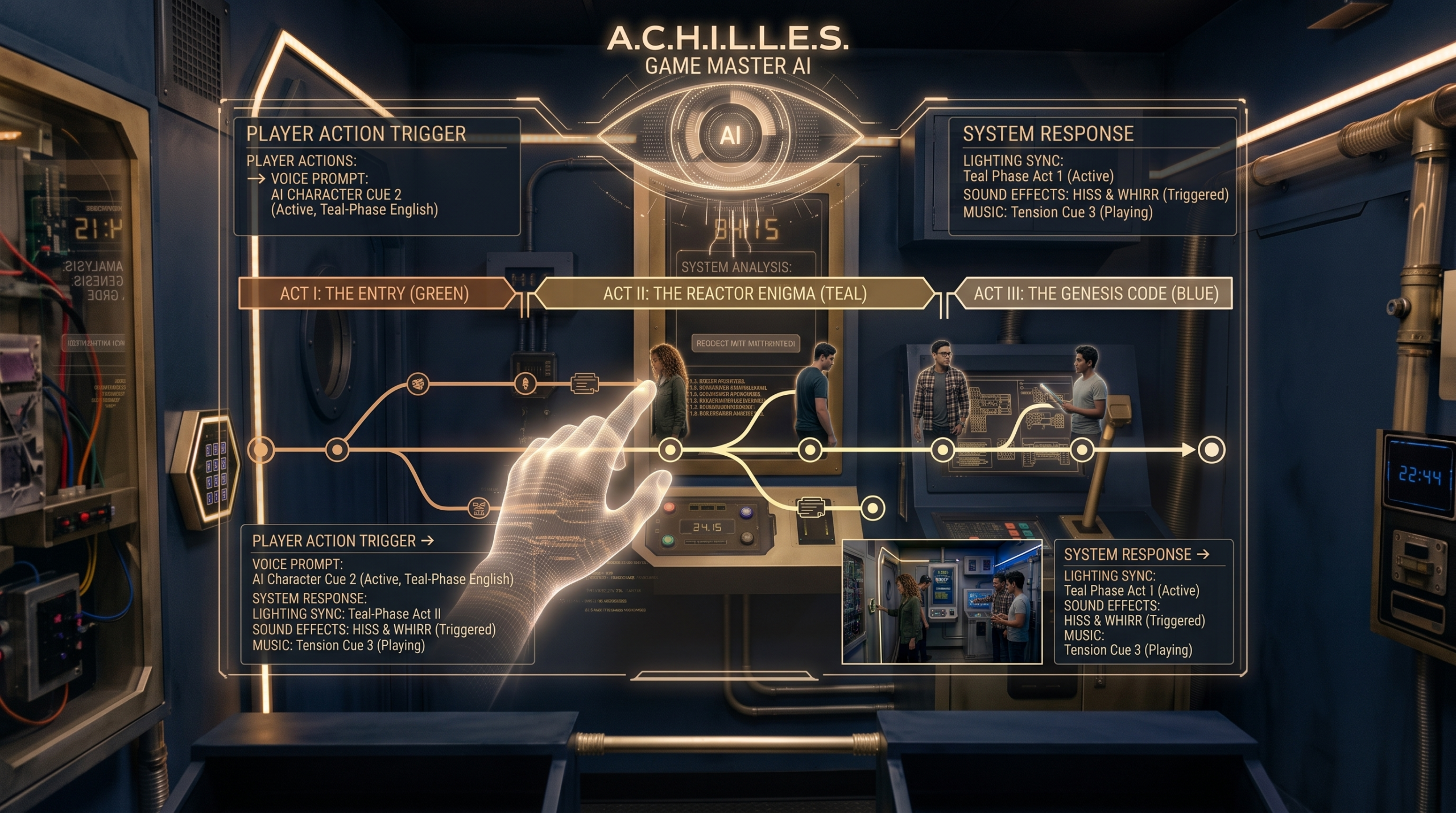
In a traditional escape room, a game master watches each session, gives hints, and resets the room afterward - one staffer per room, all day. Automated hints, voice-acted by different characters, remove most of that staffing cost - the biggest variable expense in the business. Here is how.
How the automation works
- A voice guides the story. Instead of a person feeding hints, a voice-acted character narrates the plot and delivers clues at the right moments - in any language you record.
- The game tracks progress. Built-in electronics know which puzzles are solved and trigger the next beat, lights and sound automatically.
- It self-guides the players. Groups move through the story on their own; no operator needs to be in the room or watching a screen.
- Quick reset. Resetting between groups is fast and simple, so one person can turn rooms over between sessions in 2-3 minutes.
What automated story guidance saves
- Staff: one host can cover several rooms instead of one game master per room - often the difference between a thin margin and a healthy one.
- Consistency: every group gets the same well-timed hints and pacing, not a tired operator’s improvisation.
- Scheduling: fewer staff constraints means you can run more slots.
Why it matters for margins
Staffing and occupancy decide profitability (see ROI / revenue per sq ft). Automation pushes both the right way: lower staff cost, more bookable slots. It is what lets a small venue run a social gaming room profitably without a big team.
Does “automated” mean impersonal?

No. A well-written, voice-acted character can be more immersive than a person on a microphone - it is part of the story, not an interruption. And you keep a host on the floor for welcome, safety and upsell; they just are not locked to one room.
A professionally voice-acted character can be more immersive than a person on a microphone: part of the story, not an interruption.
Which venues benefit most from automation
Automation pays off anywhere labor is the constraint - which is almost everywhere. A family entertainment center running many attractions cannot staff a game master for each; one host across several self-guiding rooms keeps the floor covered. Hotels and resorts want an amenity that runs without adding headcount. Malls and food-court operators need something that turns over quickly with minimal staff. Bars and cafes want an experience that fits between drinks and food without a dedicated employee minding it.
In every case the logic is the same: the attraction earns per player, but the payroll does not scale with it. That is what turns a fun idea into a profitable one.
It also makes launch easier. You do not need to hire and train a team of game masters before you open - you need one host who can welcome guests, help when needed, and reset between groups. Fewer people to find, fewer to schedule, and consistent quality every session.
FAQ
Do I still need staff on site? Yes - one host for several rooms (welcome, help, reset), not a game master per room.
Can hints be in our language? Yes - voice hints can be recorded in any language.
Does it reset itself? Reset is quick and simple for a host between groups.
See it in action
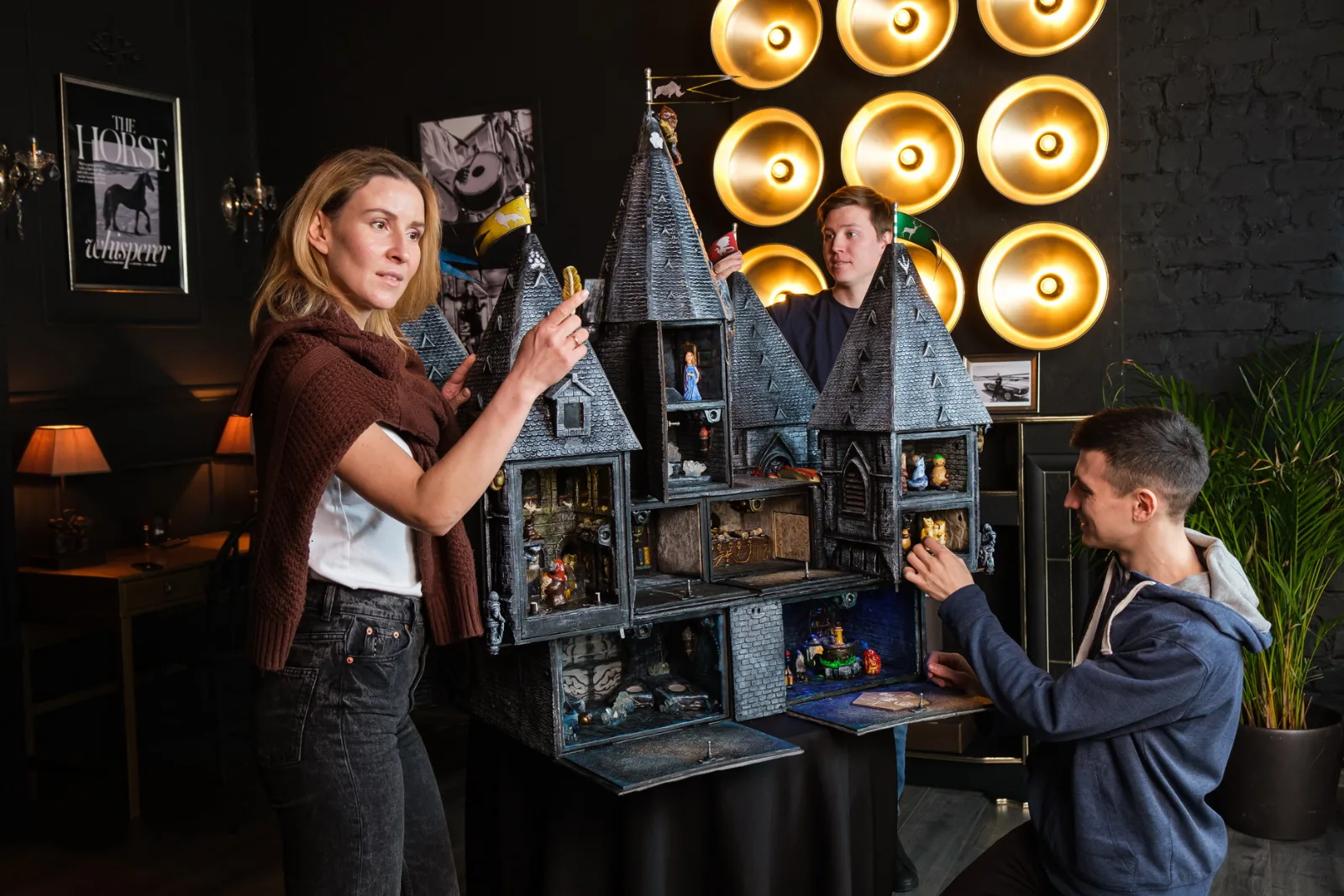
Explore the voice-acted Chronicles of the Living Castle, or read how to open a social gaming room. Questions about your floor? Tell us about your space.
See the full lineup
Which escape room fits your venue?
Explore the products