How to Open a Social Gaming Room: A Step-by-Step Guide
A social gaming room is one of the fastest-growing ways for a venue to turn floor space into a booked, repeatable experience. This guide explains what the format is, why it works, and the practical steps to launch one - without building everything from scratch.
What is a social gaming room?
A social gaming room is a space built around interactive, story-driven attractions that small groups play together - usually one to five people, for about half an hour to an hour. Players step inside a story, solve tactile puzzles, and move through a plot whose outcome depends on their choices. Think of it as the social, hands-on cousin of the cinema: people pay for an experience they create together, not one they passively watch.
The format suits almost any venue with foot traffic: family entertainment centers, malls, hotels and resorts, themed cafes and bars, and dedicated escape venues.
Why venues add one
- It fills a gap. Most venues have plenty for young children and not much for teens and adults beyond food and screens.
- It drives repeat visits and higher spend. Groups come back for new stories, and a finished game often leads straight to a booking, a meal, or a celebration.
- It runs lean. Modern attractions are voice-acted and self-guiding: recorded characters lead the players and give the hints, so one host can cover several rooms - no dedicated game master per room.
- It pays back fast. A small-footprint attraction occupies a few square meters yet can reach the same per-player price as a large room. (See our payback case study.)
Step by step
1. Choose a high-traffic location. Space near a food court, inside a mall, or within an entertainment center works best - you want people walking past who can be drawn in.
One host covers several rooms: voice-acted characters guide the players through the story themselves.
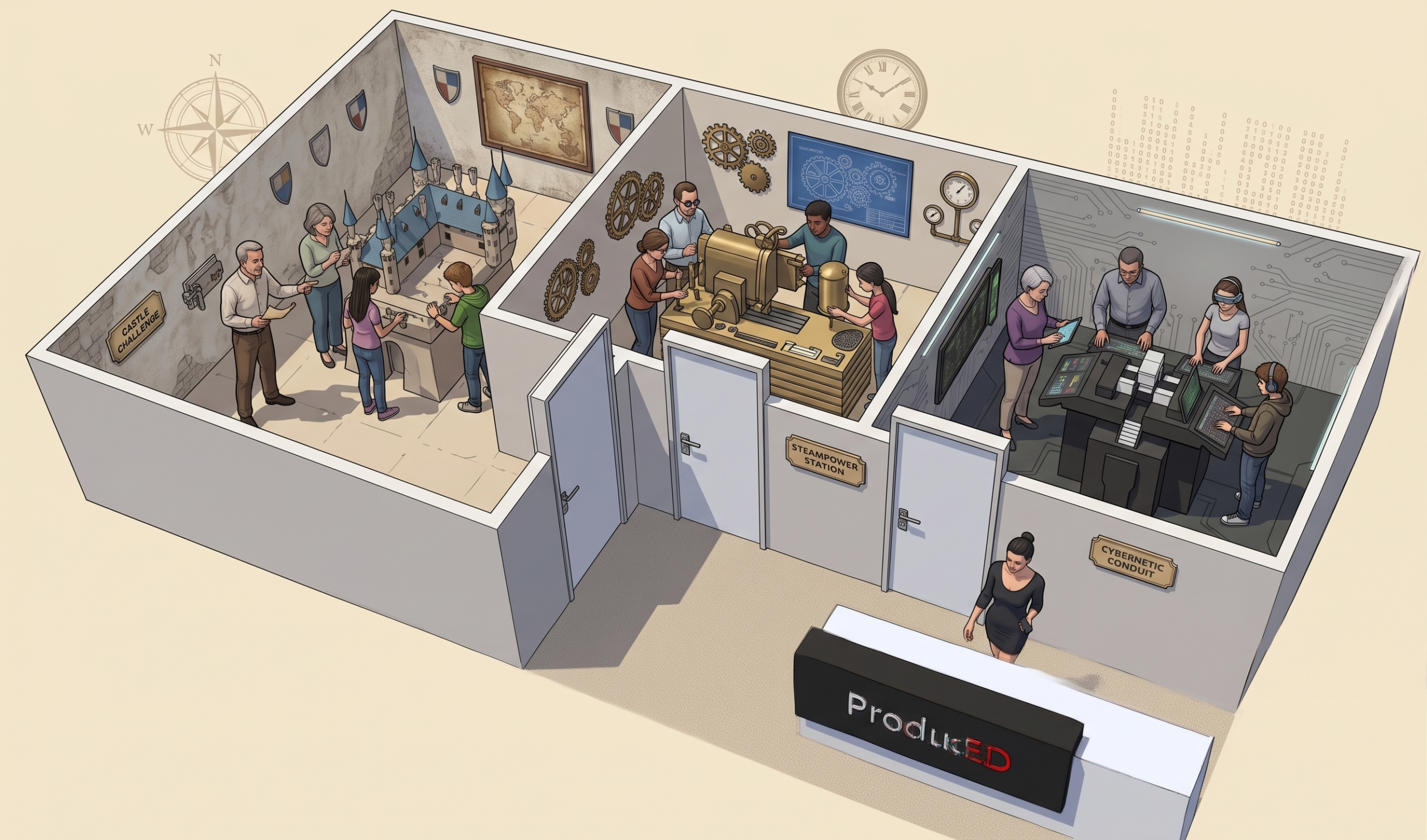
2. Plan the layout. Divide the area into a few rooms of roughly 5-8 m² (about 55-85 sq ft) each. A single space can host one or several attractions side by side.
3. Add light theming. Simple decor in the theme of each attraction deepens immersion and helps players forget the world outside. Add lighting where it helps the mood.
4. Install turnkey attractions. This is the shortcut. Instead of designing electronics, puzzles and audio yourself, a turnkey attraction from the right supplier arrives built, programmed and ready to run - plug in and play. You can still re-theme it: add puzzles, rewrite the story, record your own voice hints in any language.
5. Staff it lean. Because the attractions are self-guiding, one host per shift can typically service three to four of them. For venues whose only players are young children, plan for an animator to guide the game.
6. Drive traffic. Use your existing channels - social posts, on-site signage, ticket-desk upsell, partnerships - to tell new and returning guests there is something genuinely new to play.
What does it cost, and what does it return?
Costs depend on space, theming and how many attractions you start with. The turnkey route keeps the build cost and timeline far lower than constructing rooms from the ground up. For a full breakdown, see how much it costs to open an escape room and turnkey vs DIY.
FAQ
How much space do I need to start? A single attraction works in about 4-8 m². You can grow from one room to several as demand builds.
Do I need experience running games? No. Turnkey, voice-acted attractions are designed to run with minimal training and almost no staff.
Can it match my brand? Yes - you can re-theme the story, add puzzles, and record voice hints in your own language.
Start your social gaming room
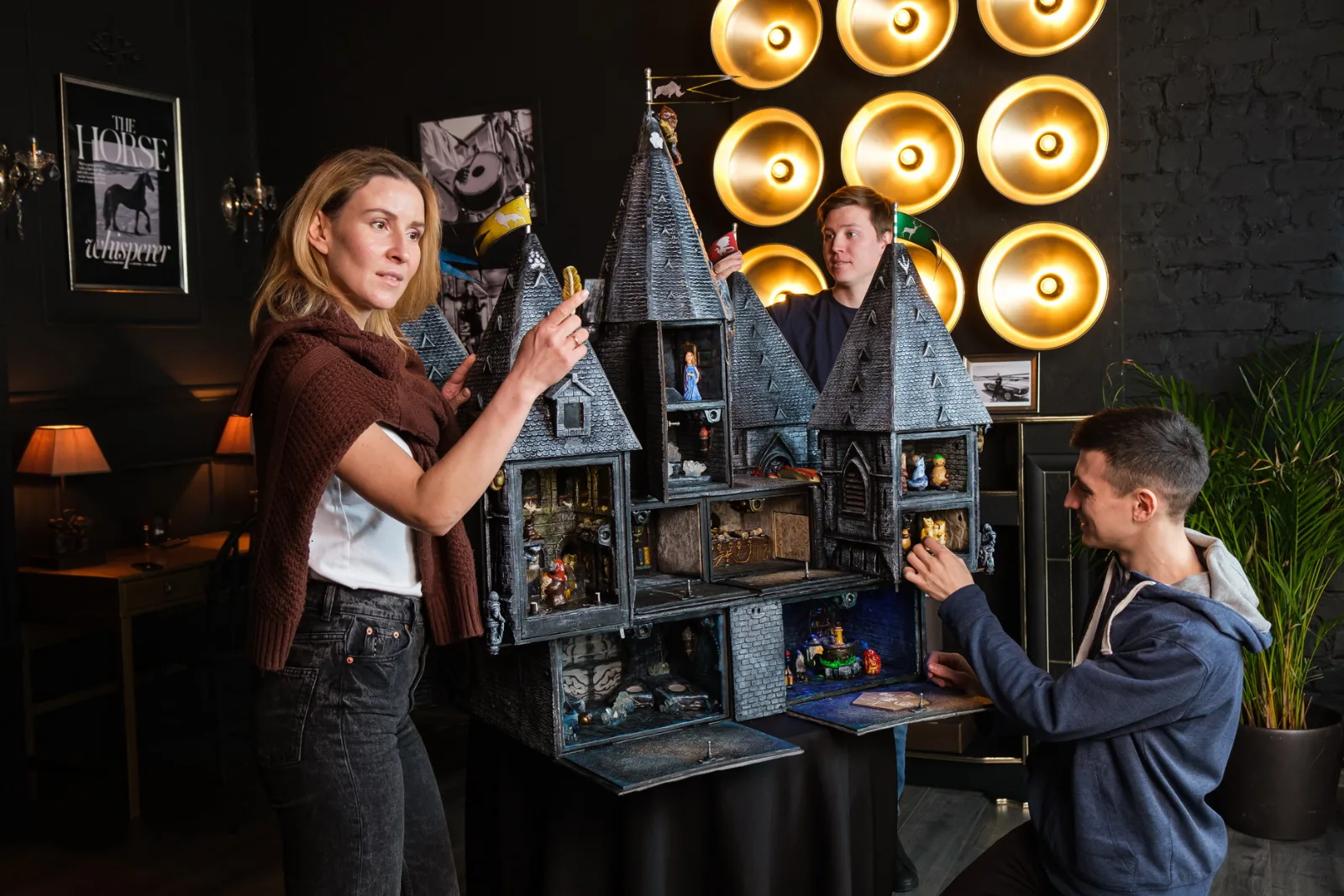
Browse the worlds you can drop into your venue, starting with the Chronicles of the Living Castle, or tell us about your space and we will help you plan the fit.
See the full lineup
Which escape room fits your venue?
Explore the products