When an Escape Room Gets Stale: Refresh or Replace It
An escape room doesn’t run forever: within a few years everyone who was interested has played it, and sales decline. For an owner this isn’t a question of creativity but of revenue - a stale room stops bringing regulars back and spoils the first impression for newcomers. Let’s look at how long a room lasts, the signals that show it’s aging, and what pays off best in each case: refresh it, replace it, or leave it as is.
How long an escape room lasts
There’s no universal figure - it depends on the city and its population. The smaller the city, the faster a room exhausts its audience: everyone who was interested has already played. From our experience and our clients’, a rough benchmark for a city of a million is about four years.
We owned our own escape rooms in a city of a million and a half. After four years we wanted to replace them: our regular audience had played through everything we had.
The industry backs this up. Per Room Escape Artist’s December report, the average U.S. venue has 3.8 games, and owners across the country report falling sales. The report ties part of the problem directly to old rooms: what wowed guests a few years ago looks dull today, and a newcomer who lands in a dated room doesn’t come back - not to it, and not to the format at all. By industry estimates, 44% of operators lose repeat guests precisely because they don’t refresh their games.
Signs a room has gone stale
Look at the numbers and the guests, not the calendar.
- Repeat visits are dropping. Your guest base stops responding to email campaigns and promotions: there’s nothing new for them to come back to. We covered working with your base in our article on retaining guests without discounts - but you can only retain people with something that’s new to them.
- New guests compare you to the best venues in town, not to your own past. The market keeps moving: entertainment investment now flows into formats with regular content updates rather than major rebuilds. A guest who played a strong new venue yesterday judges your room against it today.
- The room has fallen behind behavioral trends, not just technology. It’s not the boards and sensors that change - it’s people: what they enjoy doing together, what they film, what they share. A puzzle built on “pure mechanics” used to impress on its own; today you can build a low-tech room that’s on-trend - and it will fill up with bookings.
A room ages physically in one order: props, décor, electronics. But it stops impressing in another: props, electronics, décor.
That order tells you where to look during an inspection. Props take thousands of hands first and bore guests first. Electronics last the longest physically, but they age emotionally before the décor: an effect that was a “wow” three years ago is something guests have already seen at competitors. Décor wears slowly and keeps working on the atmosphere the longest.
Three levels of refreshing an escape room
Level 1. Props and sound
The cheapest level: replace worn props and refresh the sound. Fresh voice-over changes how a room feels more than you’d expect - it’s the voice that guides the guest through the whole game, with no host in the room.

In our kits, the voice-over is a set of audio files. It updates remotely: no site visit, no dismantling the room, no pause in sales.
Level 2. A new storyline on the same hardware
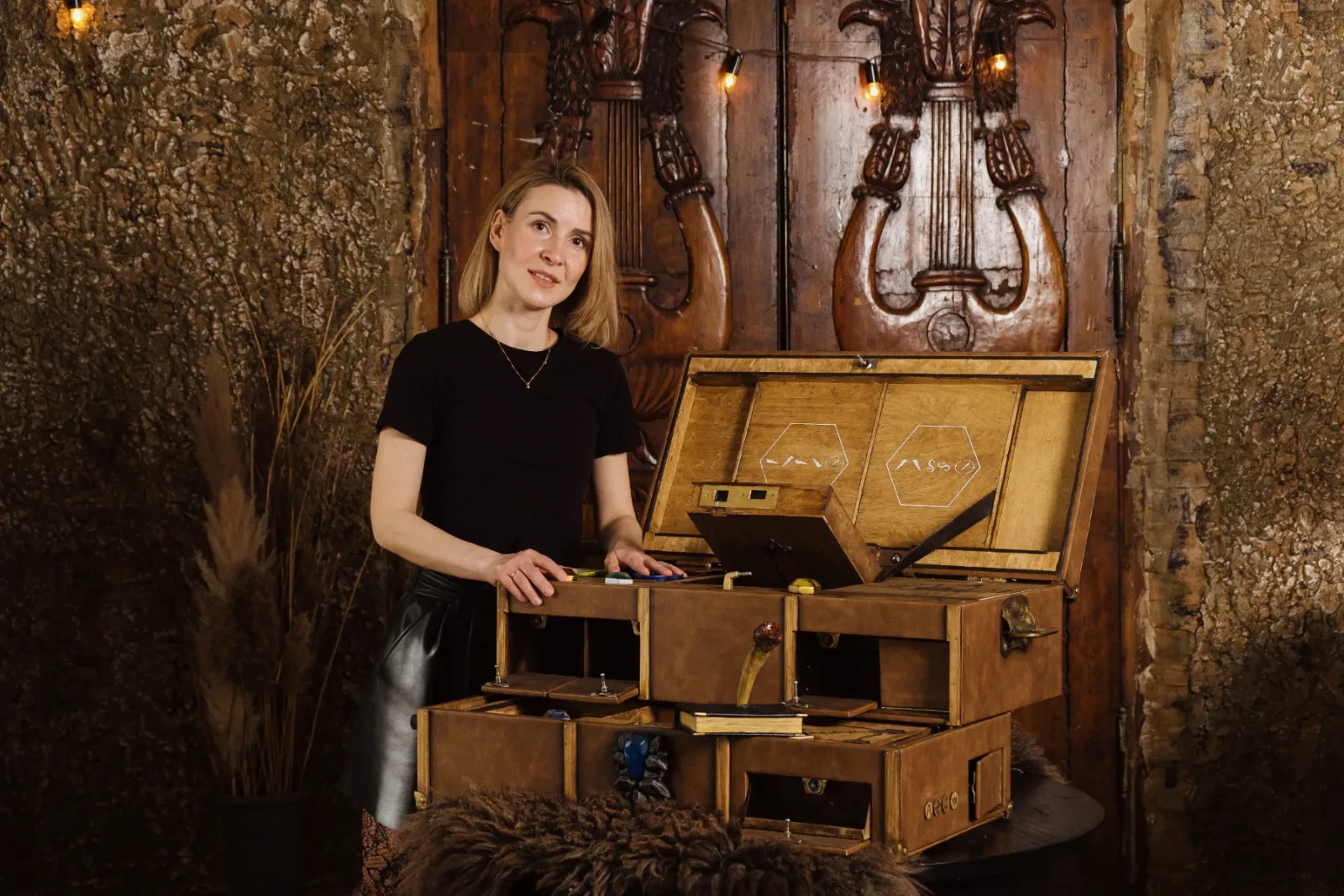
A room’s electronics and mechanics last longer than its story stays interesting to guests. So you can swap the story without throwing out the attraction. That’s what Alexey, owner of Conundroom in Washington State, did: he took our chest, rewrote the backstory for his venue, recorded his own audio hints, and built his own puzzles around it. At $35 per player, the game paid the chest back in two months.

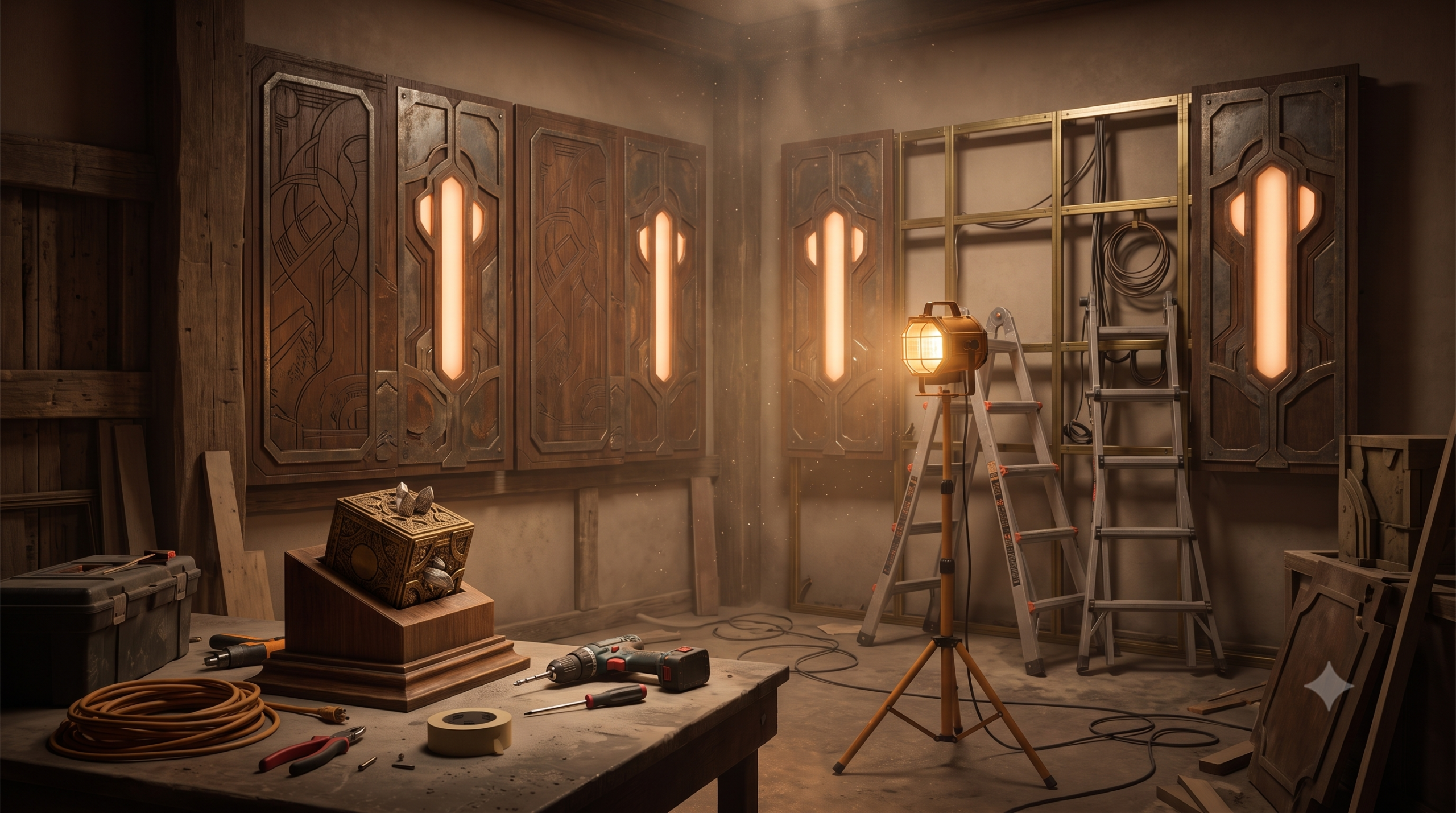
That’s exactly why we designed the castle as capsule-based: every game scene inside is a removable module. The shell, wiring and controls stay in place, while the scene’s contents can be swapped. A team of guests returns to the same story world - but plays a different story.
Level 3. Replacing the attraction
When the format itself loses out to the city’s newer venues, cosmetics won’t save it - you replace the whole room. That’s a normal part of the business, not a defeat. One of our clients in Switzerland ordered a castle specifically as a replacement: another manufacturer’s attraction had run in the space for several years and had grown dated. And Alexey’s venue, mentioned above, refreshes its line-up of attractions every two or three years - more often than any of our clients - and earns steadily: there’s a logic to frequent rotation.

There’s also a third path between “keep” and “replace” - expansion: the old room lives out its days while a new one goes up beside it. That’s what our client in Oman did - instead of replacing, he added a second format alongside the one already working.
The economics of the decision
“Leave it as is” is a decision too, and it has a price: occupancy falls, and the temptation of discounts creeps in - discounts that eat your profit. Room Escape Artist recommends a different move to owners: tiered pricing, where the new room costs more and the old one less. That way a refresh not only protects occupancy but lifts your average ticket - guests buy the new room at the top price while the old one keeps working at the lower one.
An owner’s biggest fear is downtime. Building a new room in-house takes months, and the space earns nothing the whole time. With a turnkey kit there’s almost no downtime: while the old room runs, the new one is being made (a chest takes about a month, a castle two or three) and ships by air. On-site installation is 30 minutes for a chest and four hours for a castle. Take down the old game in the evening - sell the new one the next day. We covered how to work out the payback on a new room in our article on escape room profitability, and you can run the numbers for your own venue in the calculator.
FAQ
How often should you refresh an escape room? A rough guide is once every four years, and sooner in smaller towns: the audience is smaller and gets used up faster. But watch your share of repeat guests and your base’s response, not the calendar.
What should you change first on a tight budget? Props and sound: they age first, both physically and emotionally. It’s the improvement guests notice most for the least money.
Change the storyline or the whole room? If guests praise the room but have “already done it all,” a new storyline and voice-over on the same hardware is enough. If newcomers rate the room below other venues in town on their very first visit, replace the attraction.
What to do with the old room? Don’t retire it early: drop its price and sell it alongside the new one - it’ll keep bringing in money. And portable formats can be moved to another location or taken around events.
A new story - without the construction
Take a look at the formats: chests refresh a room with no renovation, while the castle becomes a venue’s new flagship room. Or tell us about your venue - we’ll suggest what fits your space and budget.
See the full lineup
Which escape room fits your venue?
Explore the products