Escape Room ROI: Revenue per Square Foot, and How to Maximize It
The reason small story-driven attractions are spreading through venues is simple: revenue per square foot. A small, story-driven attraction can earn like a much larger space. Here is how the economics work, and how to get more from the same footprint.
The core numbers
Your revenue per game depends on three things: price per player, group size, and occupancy (how often the slot is booked).
- A small story-driven attraction priced per player, booked through the day, can match the per-player economics of a full four-person room - from a few square meters.
- Pairs and small groups are easier to schedule than large teams, so they book more often and lift occupancy.
- Low staffing (one host across several rooms) keeps the biggest variable cost down, so more of the revenue is margin.
For a real example with occupancy and annual revenue per game, see our payback case study.
Ways to earn more from the same footprint
The attraction is the anchor - but it opens several income streams:
- A full game, not an add-on. An hour-long story game for a close-knit group - a standalone product in a private zone, with its own schedule and revenue.
- A second game per visit. Bundle it with your main rooms at a package price - guests stay on the floor longer and spend more.
- Parties and birthdays. Package the attraction into celebration deals - high-margin and repeatable.
- Corporate and team-building. Daytime weekday bookings from companies fill your quietest hours - we broke down how to build that stream in our piece on escape room corporate events.
- Events and pop-ups. A modular attraction can travel to a mall event or a corporate day and earn off-site.
- Branded extras and photos. A themed photo moment and simple branded keepsakes add small but steady revenue and double as free marketing when guests share them.
Protect the margin
Two things quietly decide profitability: staffing and downtime. Self-guiding, voice-acted play keeps staff low (see automated, no-game-master), and modular, repairable attractions keep a breakage from closing a room for a week.
A simple worked example
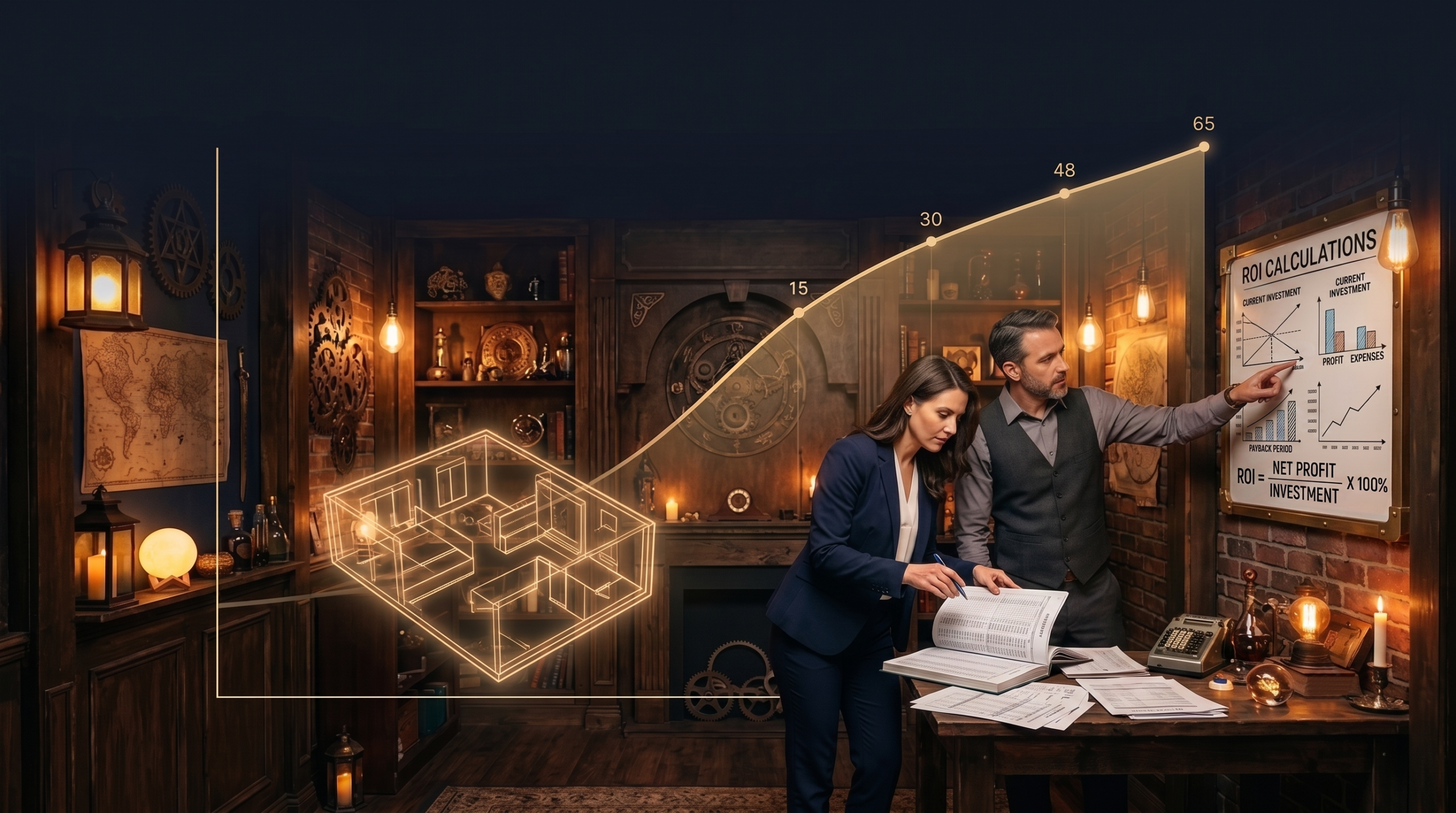
Numbers vary by market, but here is how the math tends to look. Say a small story-driven attraction is priced at $30 per player and runs as a two-player game - that is $60 a session. If it books an average of six sessions a day, that is around $360 a day, or roughly $10,000 a month from a few square meters.
Six sessions a day is roughly $10,000 a month - from a few square meters.
Now the lever that decides your margin: staffing. If one host covers three of these rooms instead of one game master per room, your labor cost per game drops by about two-thirds. That is the difference between a thin operation and a healthy one.
The point is not the exact figures - it is the shape. Small footprint, per-player pricing, decent occupancy and low staffing combine into strong revenue per square foot. That is why operators keep adding small story-driven attractions rather than only building large rooms.
FAQ
How much space do I need? A single attraction works in roughly 54-86 sq ft (5-8 m²).
What drives ROI most? Occupancy and low staffing - book the slot often, and run it with minimal staff.
How fast can it pay back? It varies, but turnkey story-driven attractions from a vetted supplier can pay back quickly - see the case study.
See the economics for your venue
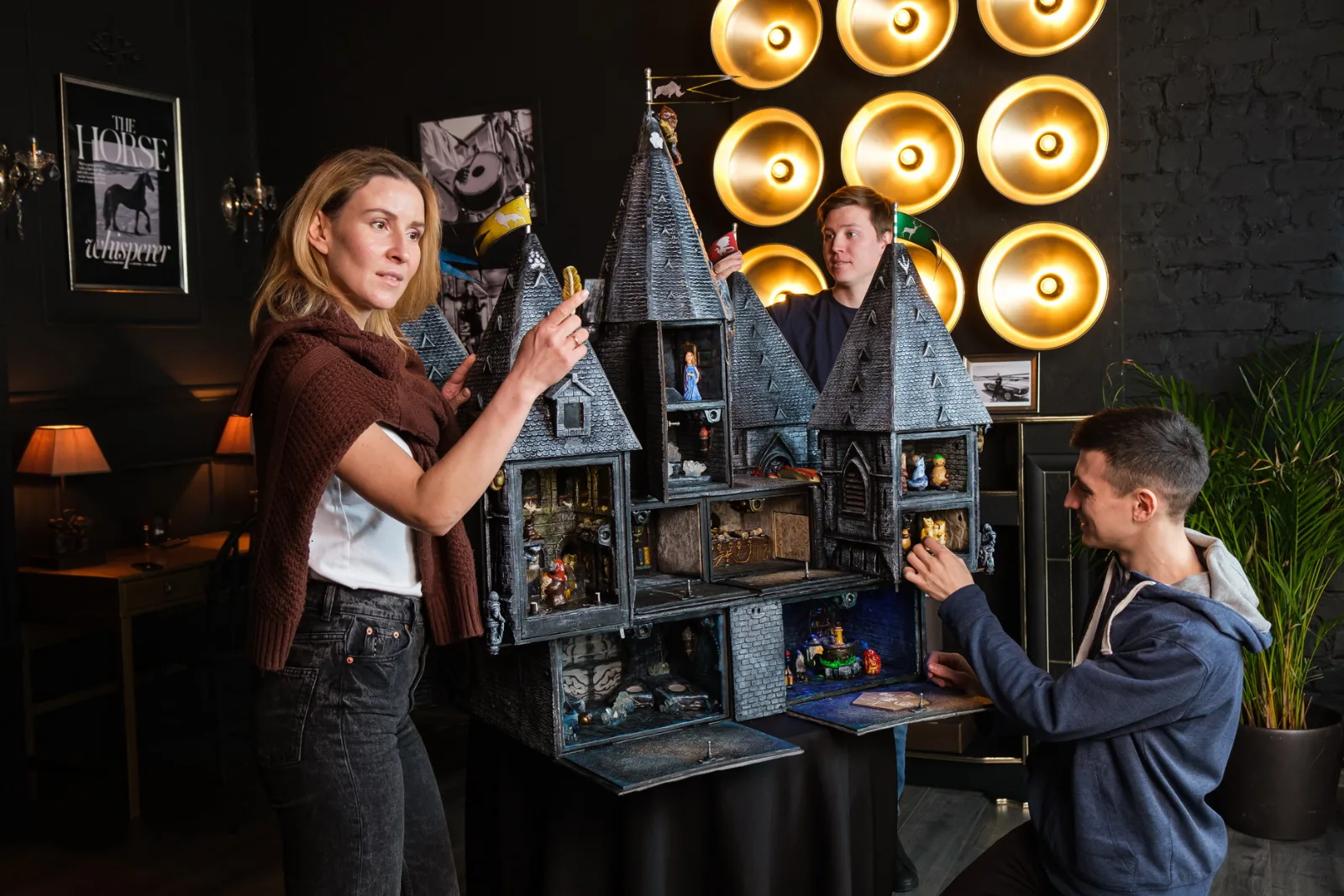
Explore the Chronicles of the Living Castle or tell us about your space and we will help you model the numbers.
See the numbers for your own venue
Run your city, ticket price and hours through the calculator to get a payback estimate.
Open the calculator