Portable Escape Room: What It Is and Where It Fits
Not every venue needs a full-room escape game. Sometimes what matters is different: placing a story attraction on a small footprint, then moving it to another spot or another venue six months later. That is what the portable format is for: an escape room built into a chest. Here is what it is, where it fits, and how it differs from a fixed build.
What a portable escape room is
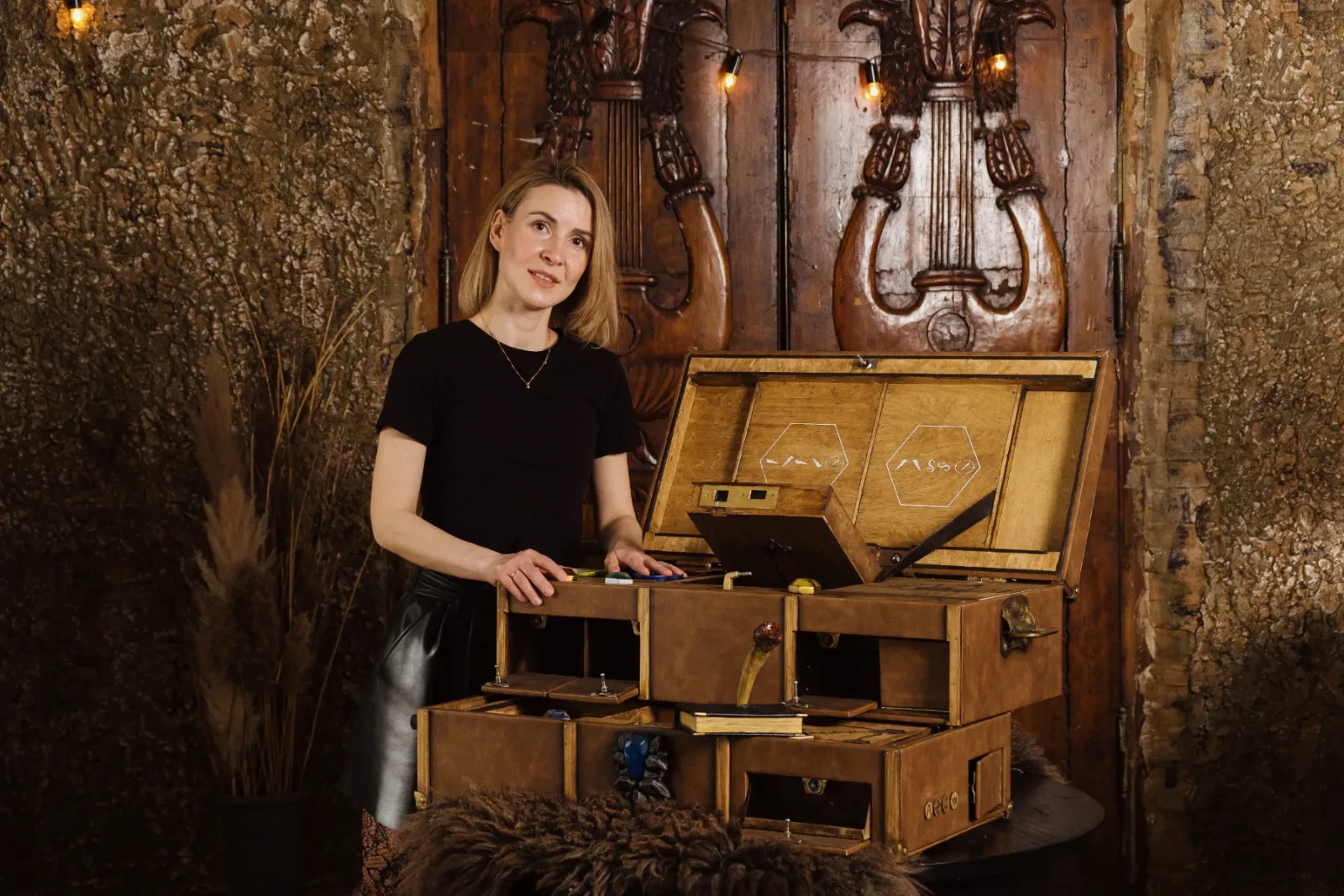
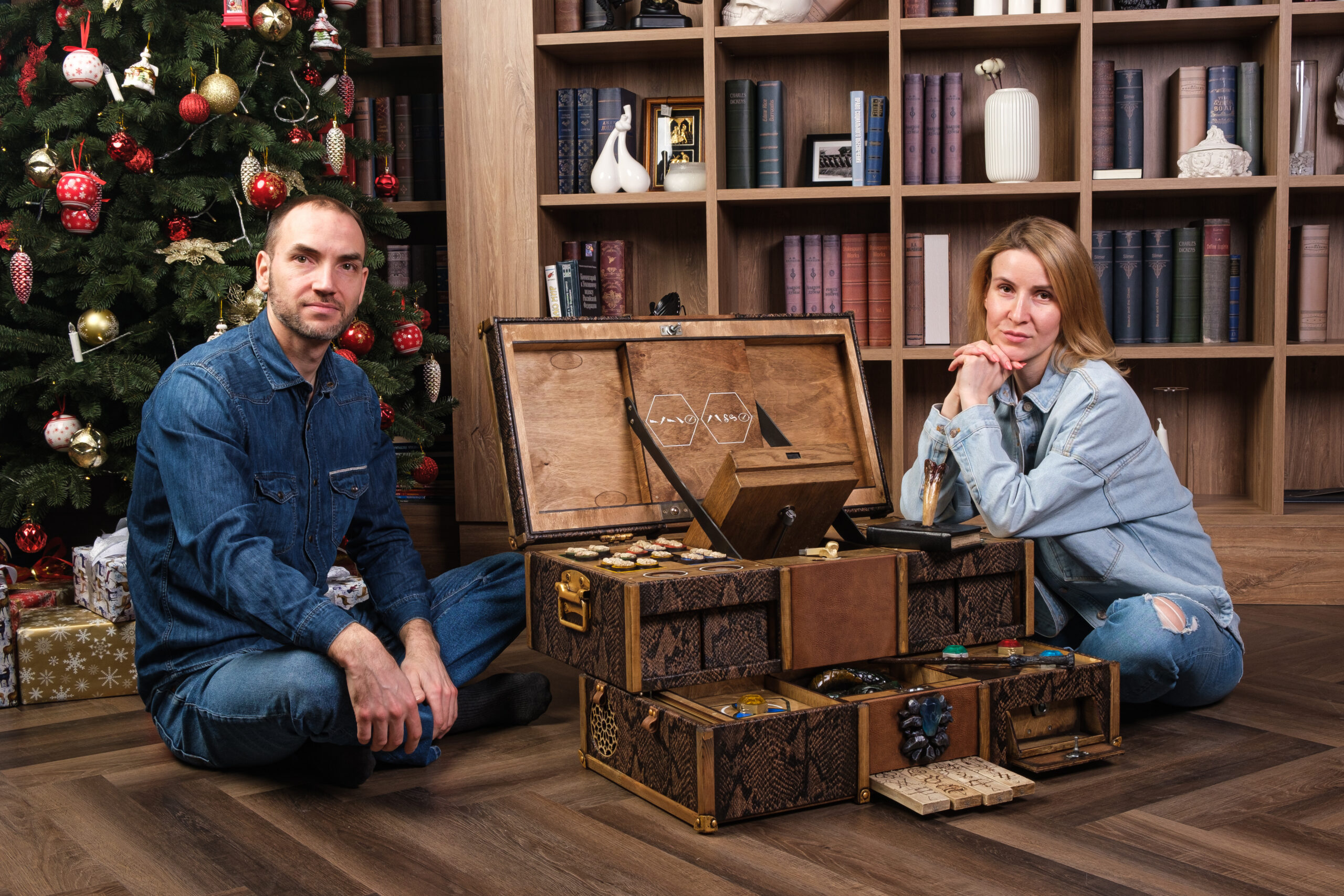
It is a self-contained, hour-long story built not inside the walls of a room but inside a chest. Guests open it, work through the story and handle the props - everything a full escape room has, except the whole attraction fits on a few square meters and travels as one piece. No permanent room to build, no heavy wiring to run, no set to mount: it arrives assembled and starts on site.
Where to put it

- A family entertainment center or games zone. It adds one more thing to do to what you already offer, so guests have a reason to stay another hour.
- A lounge, bar or games cafe. It takes up a corner and gives a group a shared story for the evening.
- A shopping mall. Place it as an island in a high-traffic spot and wrap it in light walls or screens: from outside it pulls in the crowd, inside the group stays in its own world, unseen and undistracted.
- An event or pop-up. A portable attraction is easy to move to a venue for a specific event and take back afterwards.
Portable does not mean basic

Small size is about floor area, not about the depth of the story. This is a full, voice-acted experience: voice-acted characters guide guests through the story themselves, with no host in the room. An hour of play for a group of close friends in a private zone - the same as in a big escape room, the attraction just takes less space and can be moved.
Portable is about floor area, not about the depth of the story.
Built and tested module by module
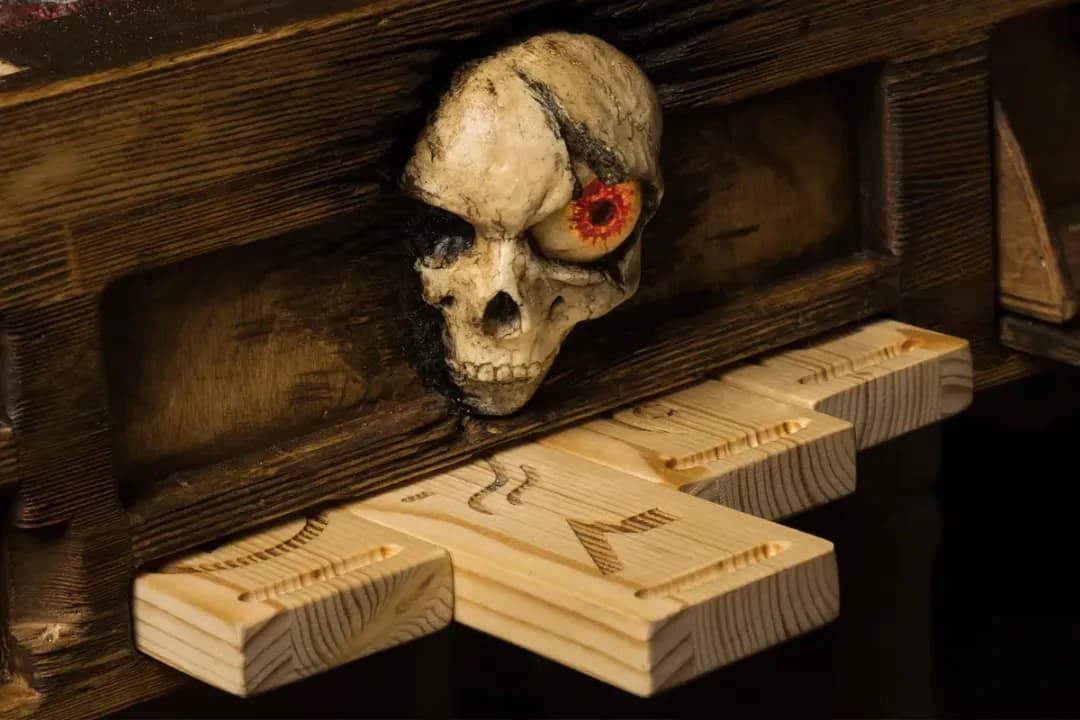
The attraction is made of separate modules - puzzles, lighting, sound, props. Before it ships, every module is checked one by one on a diagnostic panel: each lock, sensor, light and speaker on its own. What arrives is not a box to figure out yourself, but an assembled, tested attraction - the difference a good supplier makes.
If a module fails, it swaps out in minutes
Modular assembly means a fault replaces one unit, not the whole attraction. Remote diagnostics show which module responds and which does not, so a fault is found in minutes instead of hours of teardown. The right module ships out as a replacement and the venue is running again. For a portable attraction this matters even more: it can sit far away, and sending an engineer every time means downtime and cost.
What it gives the venue
A small footprint carrying a full hour of play means high revenue per square meter. Being able to move the attraction is a safety net: if a spot does not work out, you do not lose the investment - you move it to where the traffic is better. And it works at full price, no discounts: guests pay for the experience, not the floor area. You can estimate revenue for your space and footfall in the calculator on the attraction page, and see how payback is calculated in our breakdown of escape room ROI.
Questions and answers
How portable is it really? The attraction moves as oversized freight and reassembles on a new site quickly, with no permanent installation. It needs no dedicated room, foundation or heavy wiring.
Do I need a separate operator? No. The attraction is voice-acted and guides guests through the story on its own - a staff member is enough to greet the group and start the game. More on this in our piece on the escape room with no game master.
How much space does it need? A few square meters for the attraction itself, plus room for the players. A full breakdown of space and layouts is in how much space you need for an escape room.
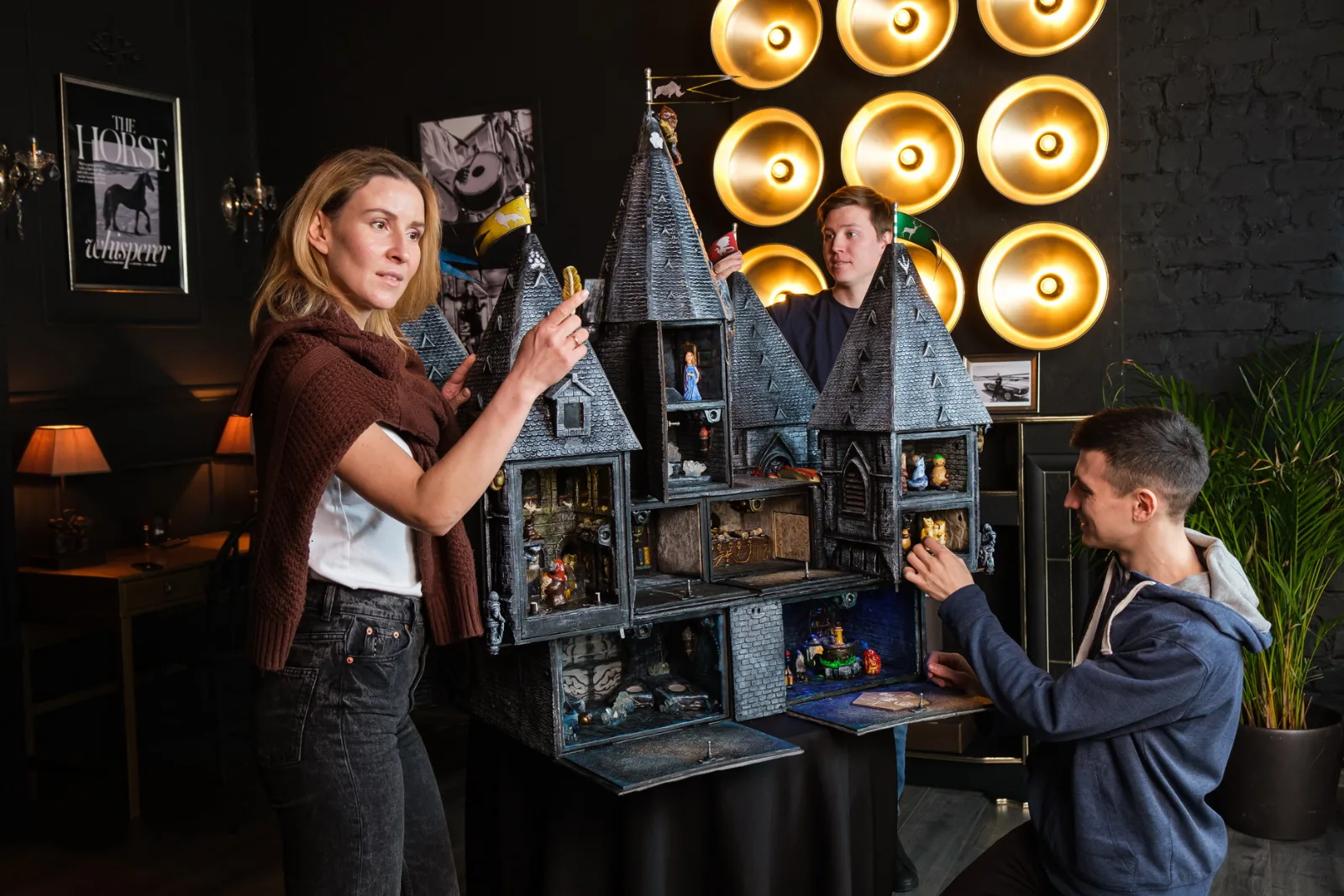
How is it different from the big castle escape room? The castle is a fixed, full-room attraction with maximum effect. The chest is a portable format for a small footprint. Both have the story and the voice-acting; the difference is scale and mobility.
See the portable attraction
The closest thing to this format is the Wizard’s Chest: a portable, voice-acted story attraction. See it on the attraction page, or tell us about your venue and we will suggest what fits best.
See the full lineup
Which escape room fits your venue?
Explore the products