What Happens If Your Escape Room Breaks? Inside Our Support
When a venue is choosing an escape room, everyone asks about price and payback. Almost nobody asks about service: what happens if the attraction fails to start one day? Industry guides tell buyers to put that question to every supplier - and they are right. Below is our answer. Not promises, but a walk through real cases from our support practice: what actually happens, who fixes it, and how long it takes.
First, a sense of scale: serious failures are rare. The typical case in our practice is not burnt-out electronics but the small aftermath of a long journey: over thousands of kilometers of shipping, a spring terminal can loosen or an SD card can shift out of its slot. Repairs like that take minutes - if you know where to look. Our job is to make sure you know where to look, even opening the lid for the first time. In none of the cases below did we need to send an engineer.
France: the room arrived, but there was no power
The attraction was delivered, the client switches it on - the control panel has no power. The worst scenario a venue owner can imagine: a brand-new attraction, thousands of kilometers from the maker, dead on launch day.
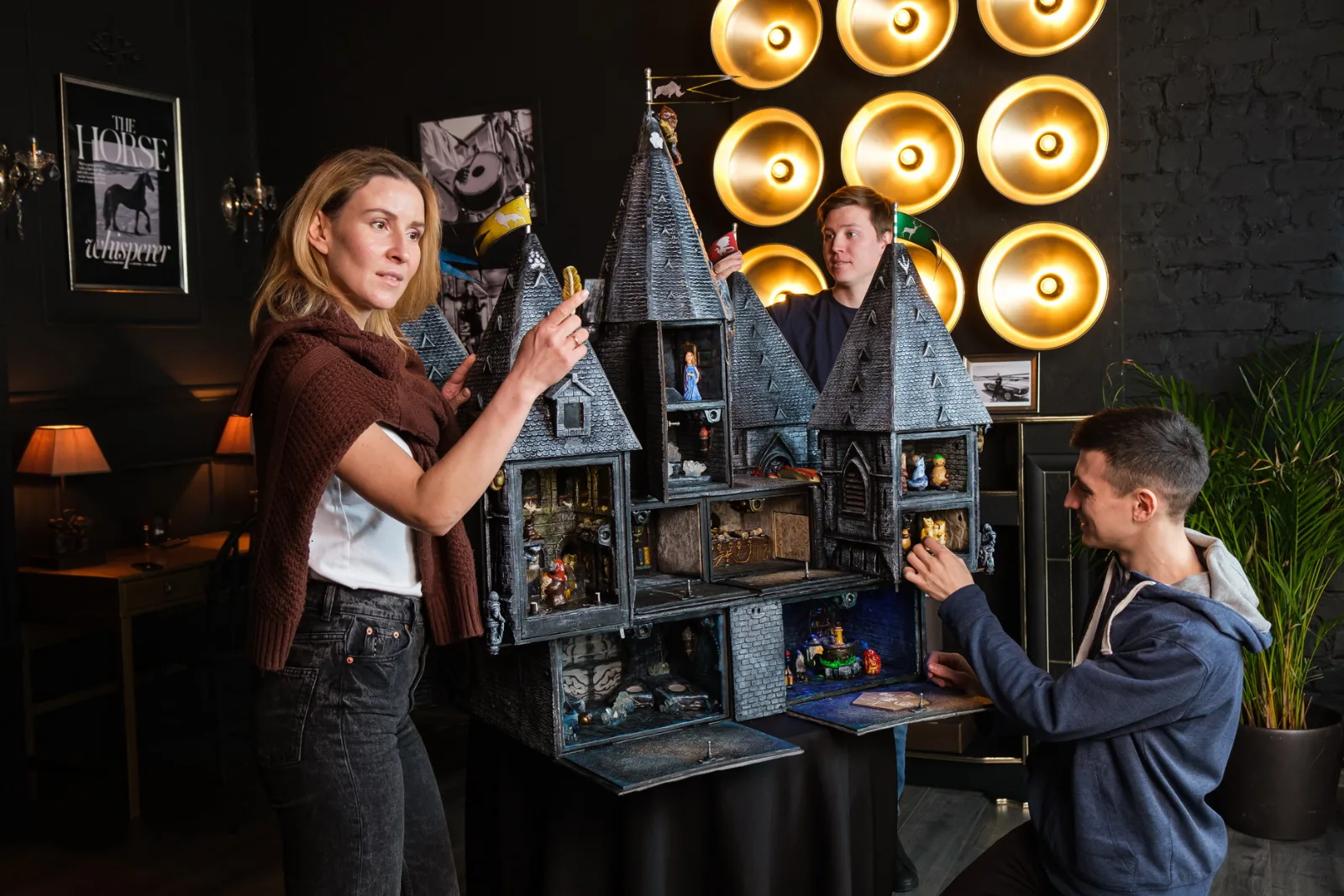
We connect remotely. The server is alive, but the 12-volt line is not reaching the main board. We ask the client to check the voltage with a multimeter. The number he sends does not match the picture - so a standard step of our protocol kicks in: we ask for a photo of the meter’s screen, because a number without a photo does not count as a reading. The photo settles it at a glance: the meter is set to resistance mode - those are ohms, not volts. We tell him which mode to switch to, and the next reading is spot on. The client does not need to know the instrument: we guide every step, the way a controller talks a plane down.
The client does not need to know the tech: support guides every step, the way a controller talks a plane down.
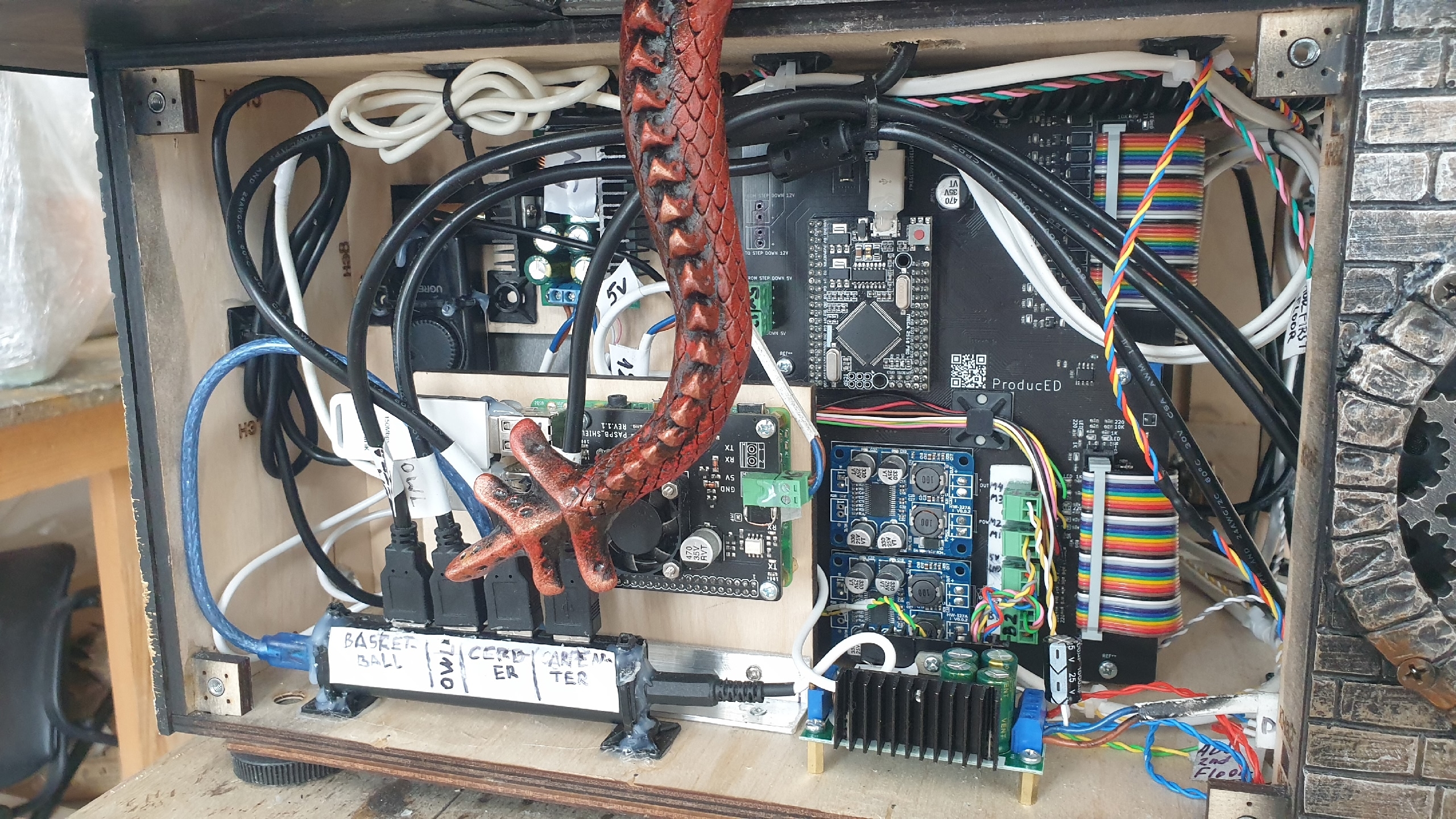
After a correct reading, the diagnosis took minutes: a spring terminal on the power distributor had loosened from vibration during international shipping. The instruction to the client: find the transparent block with the little levers, flip the lever, push the wire in until it clicks. Two minutes - and the castle came to life. No visit, no parcels, done by a person who had never seen that terminal before. And our pre-shipping checklist gained a new step: press every spring terminal home by hand so the road cannot shake it loose.
What we can see from a distance - honestly

In real time, we see the software state of every device and the logs of every game played. Did the command reach the tower, did the module answer, did the audio start. To give us access, the client needs one action: switch on the internet on the attraction’s control panel - we connect from there. The logic is simple: if the logs say the sound should have played and it did not, the problem is physical, and we already know in which unit.
Some devices also have a dedicated diagnostics mode: without starting the game, we can remotely switch on one specific LED or watch one specific sensor. That narrows a fault down not to somewhere in the tower but to a specific board.
A case from Belgium. The control panel says the upper board is offline, twenty failures in one evening - and at night the chest’s hiding places opened by themselves in an empty room. The client describes a mystery; the logs describe physics: the power supply is stable to a hundredth of a volt, the failures happen only at the moment the tiers synchronise, and never during a game. So the inter-tier spring connector had degraded: contact micro-breaks lasting fractions of a second. The same day we remotely flashed the board with a version resilient to those micro-breaks - the failures stopped. The client had one task left: clean the connector.
When we did not get it right the first time
Some cases are harder. The same client in France, a few days later: the train tower went silent - playing on Friday, mute on Monday. The first hypotheses were software: we rolled back the firmware, updated it over the air several times, powered the tower down completely. Zero effect.
So we built a special diagnostic firmware with detailed logging of the audio module and flashed it remotely. The very first log showed the exact point of failure: the processor could not reach the audio player - not software, not power, but something physical in one specific module. The verdict to the client: open the tower, check the SD card in the audio player. The card had half-slipped out of its slot from shipping vibration. Pushing it in until it clicked took a minute. A couple of hours went on false hypotheses, but the tool ended the guesswork with an exact address for the fault.
Who holds the screwdriver

The physical repair is done by the venue’s own staff - guided by us, live. As the cases above show, it is usually at the level of push the wire in until it clicks or press the card into the slot: a front-desk person handles it with no technical background. If a job needs a soldering iron or tools the venue does not have, a technician from a local service centre steps in - also working under our guidance. A breakdown does not turn into waiting for the maker’s engineer to reach your country: the fix is done by someone already there, with us running the process.
Spare parts: why a store in your country beats a parcel

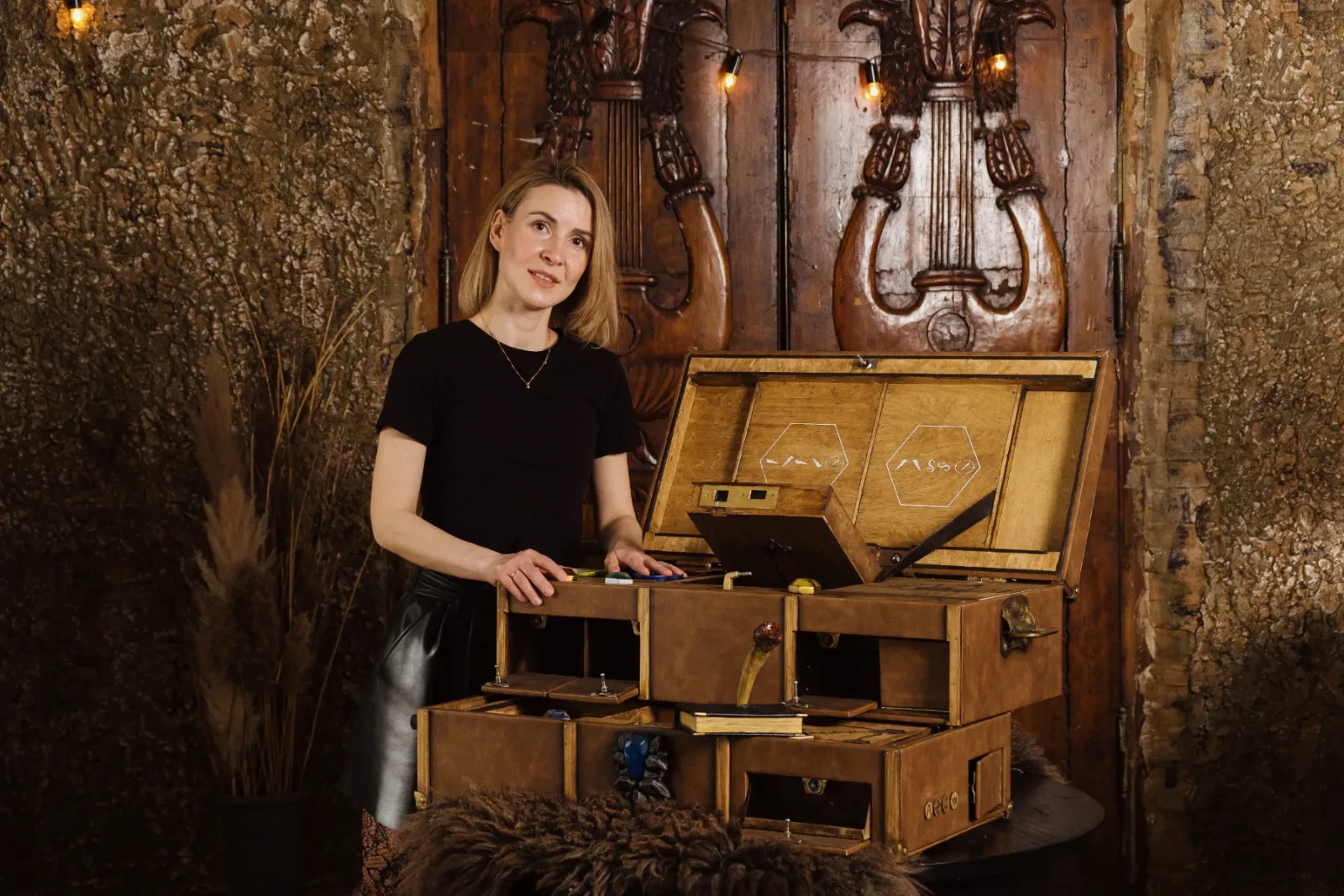
A spare-parts kit travels with every attraction: mechanical parts (a spare lock, handles), electronic modules (controllers, sensors, servos, audio amplifiers) and a scatter of components - diodes, reed switches, LEDs. A real case: two years after purchase, the magnetic lock on a client’s chest wore out. The spare was in the kit - the client unscrewed the old one and fitted the new one himself. We were online, but he did not need us.
More importantly, we deliberately design our escape rooms around modules and components sold on Amazon and in electronics stores in most countries. If a part is not in the kit, the client orders it locally with one-or-two-day delivery - faster and cheaper than an international parcel through customs. If a part does need to come from us and it is in stock, we hand it to the shipping company within a day; if it has to be made, we quote the timeline upfront.
A fix for one venue protects all the others
A case from Canada: a sensor in the train game stopped responding. We had already traced and fixed this rare glitch at another venue - on another continent. The firmware update flew to Canada over the air, and the client confirmed: working. Every attraction takes firmware updates remotely, so a fix found at one venue closes the same issue for everyone else the same day.
This works even where connectivity itself is hard. For a client in Oman, the local provider blocks standard remote-access channels - so we built a bypass channel that re-establishes itself automatically if the connection drops, with no human involved. An attraction on the other side of the world, in a country with network restrictions - on the same remote support as everyone else.
Before shipping: ten full runs

Every unit is tested as it is built: fit a sensor - check the sensor. Before shipping, we play the whole game through its script from start to finish ten times in a row. The final run is recorded on video and archived together with photos of the packed crates: a fixed record of the state it shipped in. One more rule: every delivery includes two game sets by default, so if a prop gets lost or worn, the spare is already at the venue.
The terms, in numbers
- Warranty - 1 year on components and electronic modules.
- Online support - free and lifetime. Not a year after purchase - always.
- Diagnostics - we usually start the same day you reach us.
- Spare parts - a kit in the box, plus parts available in stores in your country; shipping from us within a day when the part is in stock.
How seriously we mean lifetime: one company sold two of our chests to another company three years on - second-hand. The new owner had a corrupted memory card and the code was gone. We pulled that version out of our archives, helped restore the code and set up the connections. The new owner had never bought anything from us - but now they know who they will buy their next attraction from.
Questions and answers
Does the venue need its own technician? No. Routine fixes are at the level of push a wire in, reseat a card, swap a module by instruction - a staff member does it with us guiding over a call. Complex cases go to a local service centre, also under our guidance.
What if a component actually burns out? The logs point us to the unit, a measurement on site confirms the diagnosis, and then it is a swap from the spare-parts kit or a part bought in your country. That is exactly why we design around widely available components.
What happens after the warranty year? Online support stays free with no time limit. Parts come from the kit or local stores; whatever needs to come from us, we will send.
Does this cover the portable formats too? Yes - the chests run on the same scheme: logs, remote updates, a spare-parts kit. For a portable attraction remote support matters even more - it can end up anywhere.
Ask us about breakdowns - we like that question
When you evaluate a supplier, put the question from the top of this article to them: what happens when it breaks? - and watch whether the answer is cases or promises. Our guide on how to choose an escape room supplier has the rest of the checklist, and our piece on the escape room with no game master shows how the attraction runs day to day. Have a venue in mind? Tell us about it.
Have a venue like this?
Tell us about your space and audience, we will suggest what fits and estimate the cost.
Get in touch