Escape Room for Corporate Events: How a Venue Fills Its Weekdays
Every entertainment venue lives the same schedule: Friday to Sunday everything is booked, and from Monday to Thursday the rooms sit idle. Industry analytics puts weekday utilization of escape venues at 15-20%, against a near-full weekend. Most operators plug the gap with discounts, cutting margin in the weakest hours. But empty weekdays have a simple explanation, and the answer is inside it: your guests do not come on weekdays because they are at work. So weekdays should be sold not to guests but to their employers.
Why corporate demand is growing right now
US companies put 4.7 billion dollars into team building in a year, 21.7% more than the year before, and the trend is global. The reason is not a happy one: employee engagement worldwide has dropped to 20%, its lowest in five years, and HR departments have been tasked with giving people the feeling of a team again. After several years of online formats, companies want to gather people in person again.
An important recent shift: the corporate event has stopped being the whole office, once a year. More and more, it is small groups of 10-20: a department, a project team, a shift. These gatherings happen more often, their budgets get approved faster, and they take place not on peak Fridays but on weekdays. A small group on a weekday is exactly the format your idle rooms are waiting for.
The budgets are concrete: in the US, companies plan 65-130 dollars per employee per event, and short activities of up to an hour and a half, which is exactly the escape room format, run 39-60 dollars per person. A curious detail: small companies pay the most per person, 100-160 dollars, because group discounts never reach them. In other words, the small department on a Wednesday is not leftover traffic, it is your highest-margin client.
The small department on a Wednesday is not leftover traffic: small companies pay the most per person.
What the corporate buyer is actually buying

Anna from our team spent years in hotels before escape rooms, taking corporate bookings for restaurants, banquet halls and company parties. Her main takeaway from years of those negotiations: a company buys not an activity but a ready-made evening with no organizational headache. The first two questions in any corporate enquiry are not about the game at all: what about food and drinks, and where do we all sit together afterwards.
A company buys not an activity but a ready-made evening with no organizational headache.
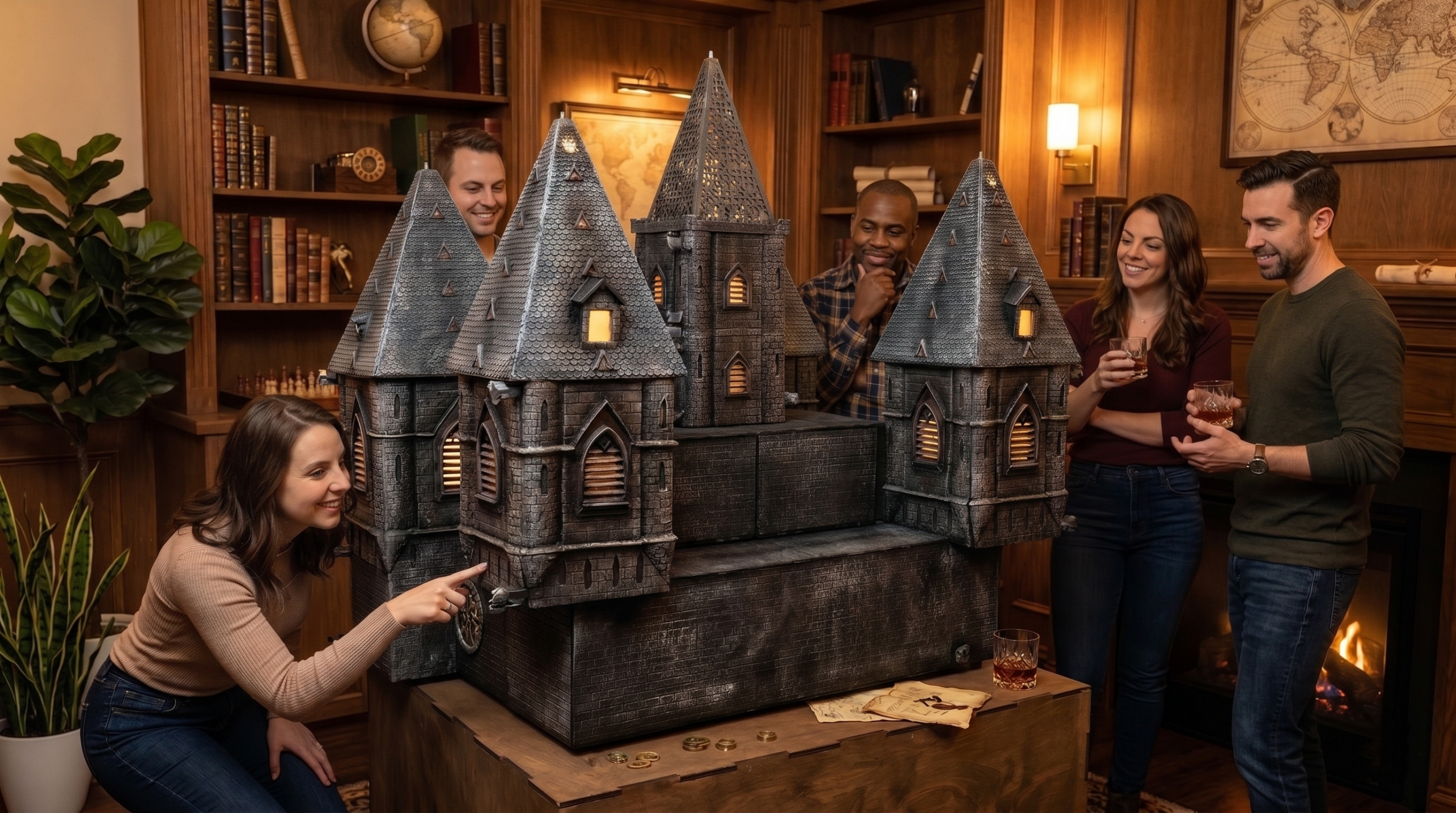
For a venue this is a checklist. To sell corporate events you need three things: the game itself, catering (your own bar and kitchen or a deal with the restaurant next door), and a space where the whole company gathers around one table after the game to discuss who did what in the story. If there is nowhere to sit, the client goes where the full evening is. A separate trump card is privacy: for a corporate buyer, the venue is yours for the evening means more than a discount.
What skipping the food costs is visible in the numbers of the adjacent competitive-socializing industry: at London’s Flight Club, 70% of revenue comes from food and drinks, not the games; at America’s Duckpin Social, for every dollar spent on play a guest leaves another one to nine dollars at the bar and kitchen. The reverse works too: if there is nowhere to have dinner after the game, the company books the game with you and takes the dinner, the drinks and most of the bill to your neighbours.
How to host a group bigger than one game holds
An escape room attraction takes a party of two to six, and a corporate group is 15-30. Venues solve this with their line-up: they run all their games at once and split the company into teams. The more different attractions a venue has, the more people it can host at the same time, while the rest are at the table, at the bar or cheering for their colleagues.
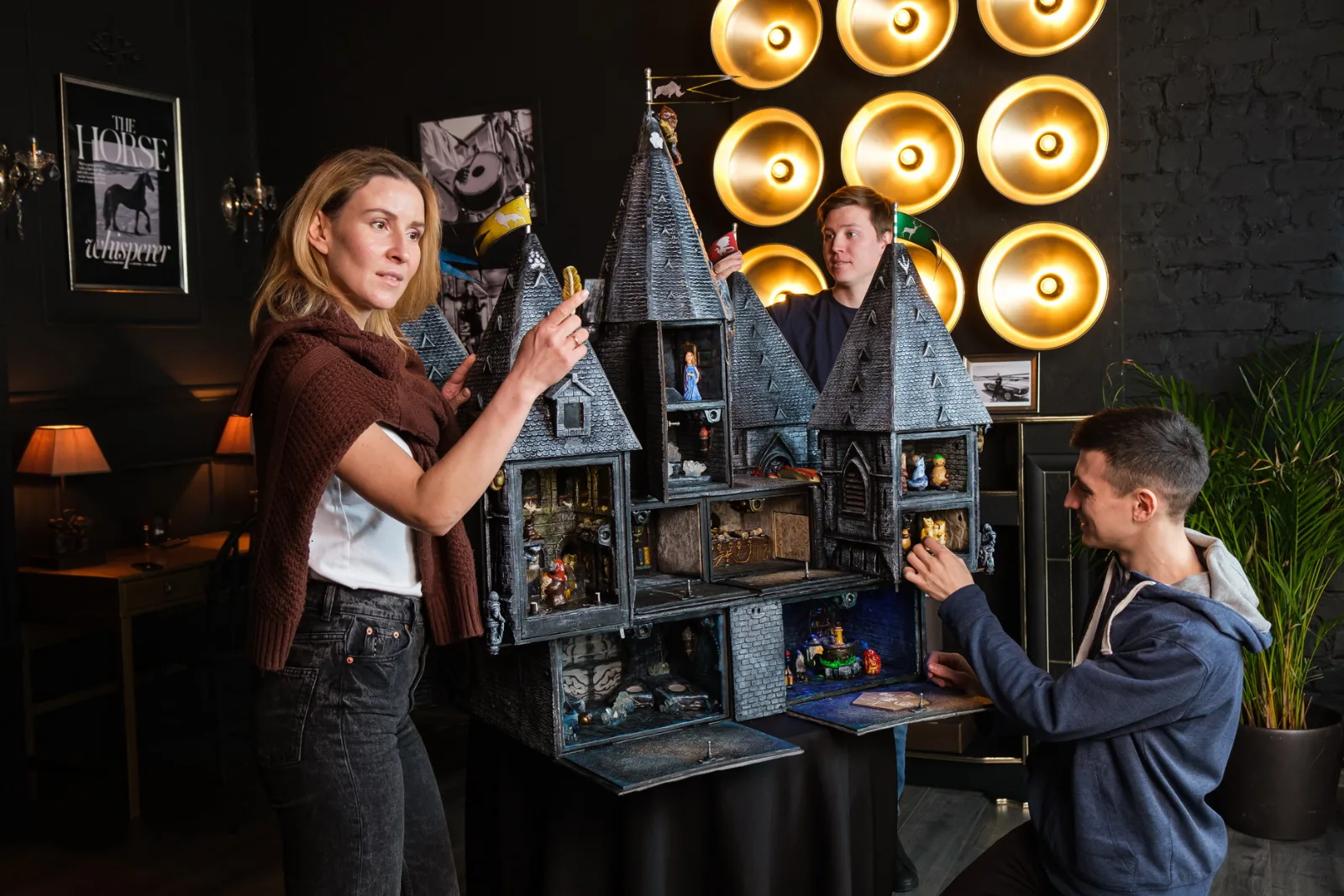
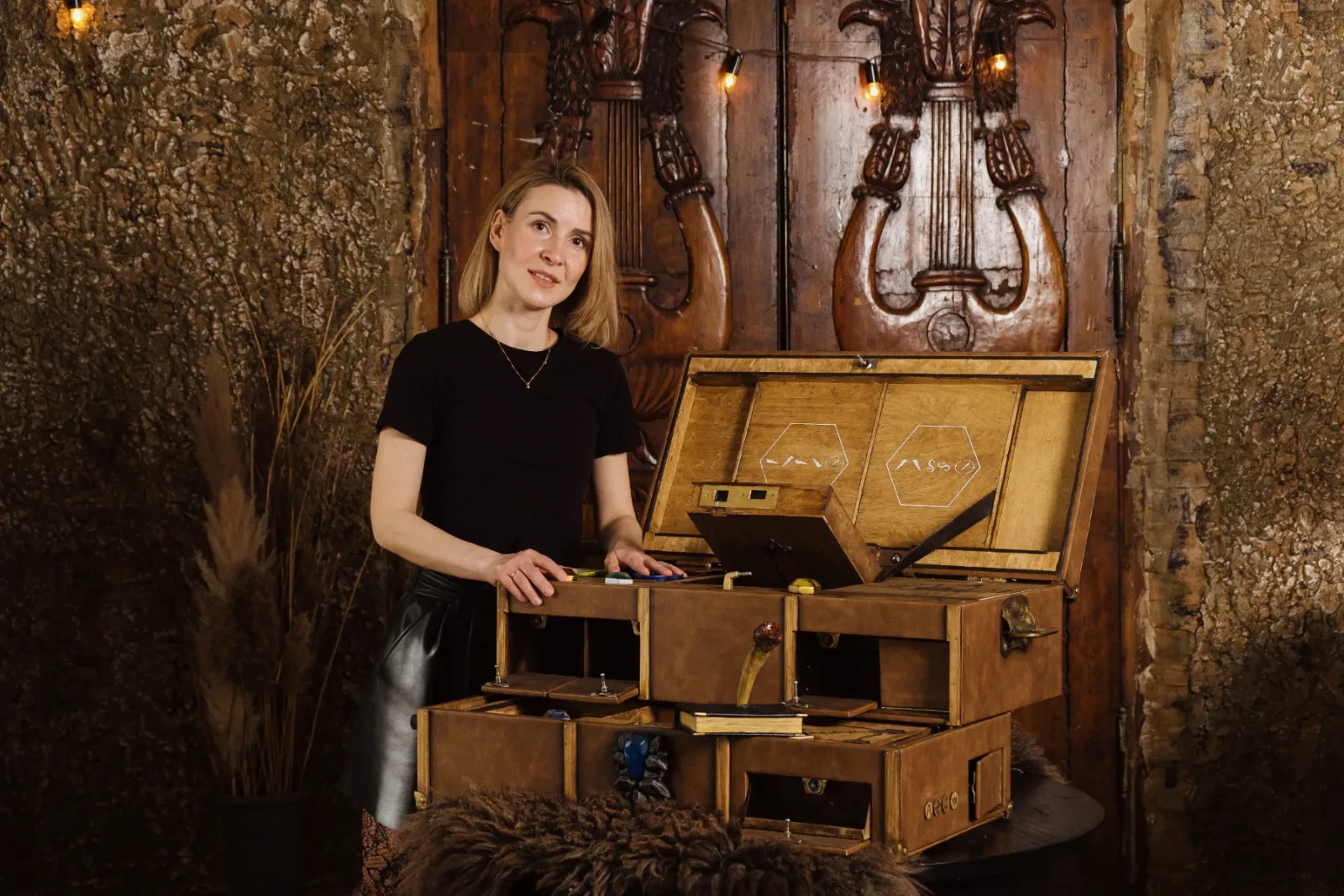
The arithmetic on our own products: the castle takes up to six players, each chest takes two or three. A venue with a castle and two chests keeps 10-12 people in play simultaneously; a company of 25 rotates through everything in two-three hours, and the evening stays full without a single dead pause. The competitive layer comes free: two identical chests turn a corporate evening into a who-is-faster tournament with a scoreboard on the control panel.
This is standard industry mechanics, not improvisation: venues with five games host up to 50 people at once, and for bigger groups a wave system works, half the company plays while half is at the table, then they switch. A practical benchmark: around 50 guests get through three different games in three hours when you run them in rotation.
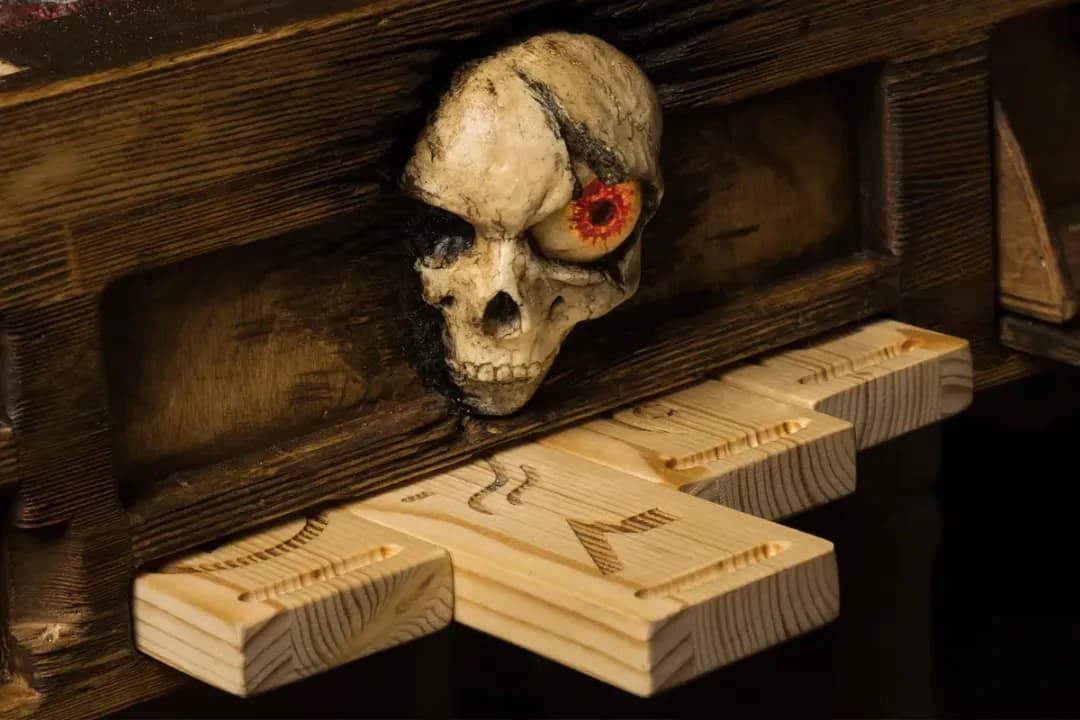
Live examples from our practice: a venue in the UK runs both chests, the Wizard’s and the Dead Man’s, and fills its weekdays with corporate events. A venue in Oman runs corporate evenings on the castle-plus-chest pair: teams rotate between the big and the small format.
The mobile corporate event: the game travels to the office
The most unexpected format came from our client in Florida: he put a Wizard’s Chest into a trailer and drives it himself to corporate events, schools, fairs and festivals. His weekdays are filled with outings: a company orders the game right to its office, employees walk out to the parking lot and step into an hour of story adventure. For a venue this is a way to sell corporate events with no walls attached; more on the format in our piece on the portable escape room.
When a corporate evening becomes serious team building
An hour in an escape room is concentrated teamwork: who takes the lead, who stays silent while holding the right answer, who gets lost first, and who pulls everyone through. Whole businesses are built on this. Singapore’s Teamwork Unlocked calls its format escape room-based leadership training: the flagship programme Submerged runs three to four hours for a team of 4-10, where the game itself is only the first part and the main one is a facilitated debrief using their proprietary Nine Key Profiles framework: what role each person took under pressure and how that repeats in work tasks. The concept, the company says, was tested on more than 150 teams at Google, and the client list includes Google, Amazon, Netflix, Apple and Visa.
Two details of that model are worth taking for any venue. First, the game scales: their portable format travels to the client’s office and takes 4 to 80 participants, so the corporate event is not tied to walls. Second, this kind of format is paid for by the training budget, not the party budget, which is why the pricing is training-grade, not ticket-grade.
An honest caveat: on its own, an escape game is a bonding experience, not an HR instrument. What turns it into a team-development tool is the debrief after the game. If you offer that format, either train your own debrief host or bring in a partner facilitator; the attraction will do its part by itself: it shows a team in action in one hour better than an office does in months.
How to start selling corporate events: practical steps
- Build a package, not a ticket. Game plus drinks plus a table afterwards, one price. Corporate pricing goes above the regular rate, not below it. Change the positioning: you are selling a private turnkey evening, not filling an empty slot.
- Make it easy for a legal entity to pay. Invoice, contract, closing documents: half of corporate clients drop off where a company account cannot pay.
- Go where the buyers sit. Office centers and coworking spaces within 15 minutes are your future weekdays. One email to an office manager with a ready package beats a banner. And we strongly recommend keeping an active LinkedIn presence, the way our team does: that is where these buyers actually live.
- Partner with a restaurant. If you have no kitchen, package with the place next door: the game at yours, dinner at theirs, each promoting the other.
- Befriend event agencies. A meaningful share of corporate bookings comes through event planners, and they need a package that ticks every box at once: game, food, timing, paperwork. Give them a ready offer and a partner discount and you get a channel that sells for you.
- Target departments, not companies. Small groups of 10-20 gather more often and decide faster. One happy department brings the next: HR people inside a company talk to each other.
- Shoot the evening. A photo of the winning team with the props is content employees will spread through their own feeds, tagging your venue.
Questions and answers
Do I need extra staff for a corporate event? The attraction runs the game itself: voice-acted characters and hints work with no game master in the room. A venue staff member greets the company, starts the teams in turn and keeps the evening on schedule.
We have one escape room. Is it worth it? Yes, start with small groups: a department of 10-15 splits into two waves, one plays while the other sits at the table, then they swap. And every attraction you add directly raises the size of company you can host.
What if the company wants actual training? Offer the format with a post-game debrief (your own host or a partner facilitator). The game supplies the material: in one hour inside a story, a team shows itself more honestly than at any seminar.
Fill the weekdays while competitors hand out discounts
Corporate events are a second revenue stream that lives exactly where your venue is empty, on weekday daytimes, and at full price. See what a line-up for it looks like: the castle for big team waves, the chests for tournaments and mobile events. Have you counted what one corporate evening brings? Run it through the calculator, or tell us about your venue and we will suggest a set-up for your floor.
See the full lineup
Which escape room fits your venue?
Explore the products