Escape Rooms in Bars: Pairing Games with Drinks
Bars and games are moving toward each other. Bars need a reason for guests to come and stay: a younger crowd drinks less and picks places where there’s something to do. Escape rooms need the foot traffic bars already have. Let’s look at the numbers and at a real-world example from our client in Montreal to see how to pair drinks with a game - and what rules keep the drinks from getting in the way of the game.
Why bars are adding games
The “bar plus games” format is the fastest-growing segment in entertainment. In the UK, the number of these combined venues grew by 455% in five years, and the entire competitive socializing market is forecast to go from 800 venues today to 1,100 by 2030. The economics explain why: at Puttshack - a “mini-golf plus bar” chain - food and drink account for 55% of revenue, and two-thirds of that is alcohol. The game brings guests in and keeps them at the table, while the venue makes its money at the bar.
The classic formula for entertainment venues with a kitchen is 50/50: half the revenue comes from the game, half from food and drink. Venues like these earn two to three times more per square foot than venues without food and drink.
For a bar owner, this means the game isn’t decoration - it’s a second revenue stream that also fills the quiet hours. For an escape room owner, it means that sitting next to a bar doubles the average spend per visit.
A real-world example: a chest at a bar table in Montreal
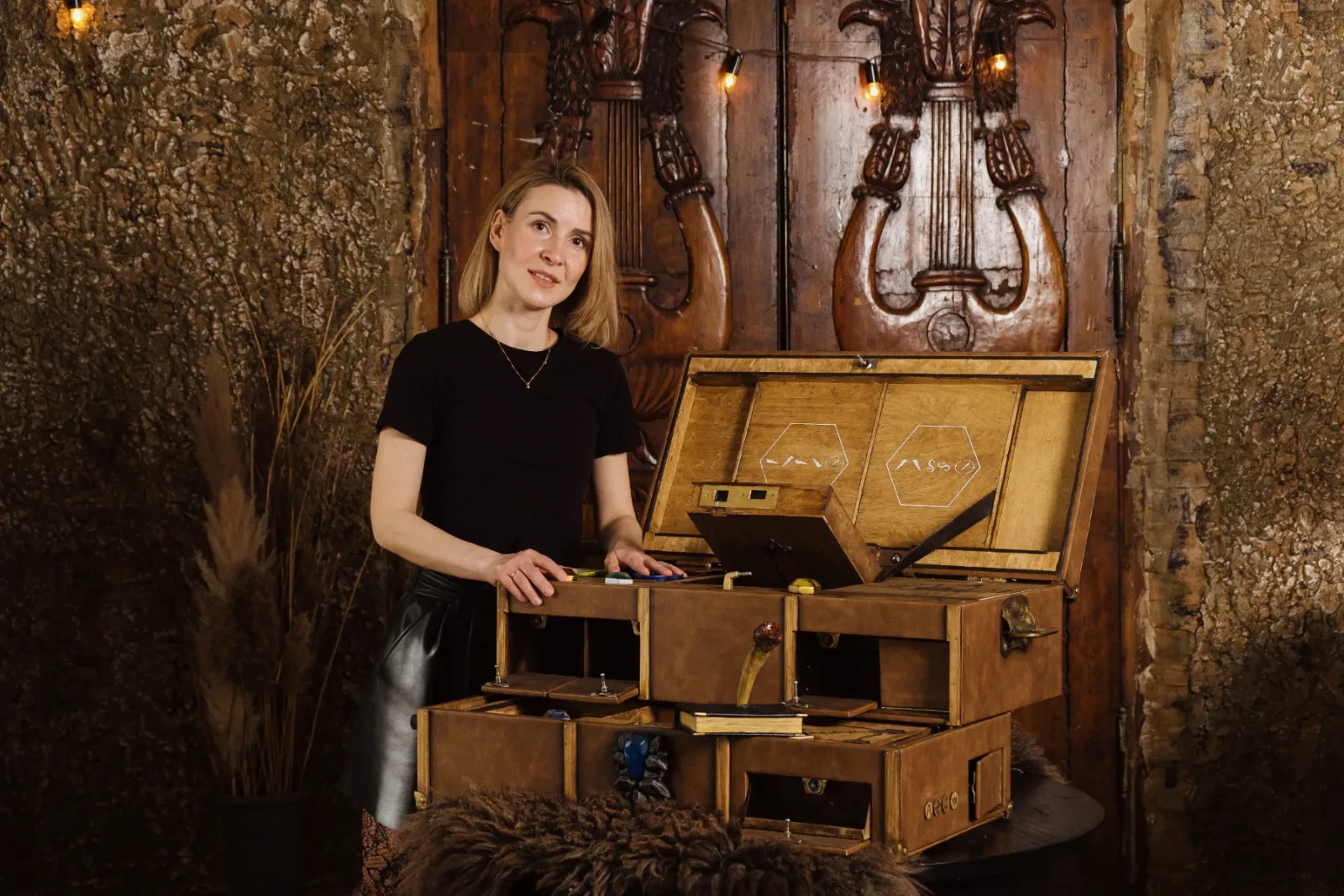
Our client Alexander runs A\Maze Old Port in Montreal’s Old Port: Inventions, a 25-seat steampunk cocktail bar with escape games inside. The classic room is played separately, while our Dead Man’s Chest sits right in the main room - a team of two or three plays at a table while ordering from the bar menu at the same time. The game runs an hour and costs $20 per person, versus $37 for the larger room.

The price difference isn’t accidental: the chest plays a different role. It’s a “here and now” purchase - a pair is already sitting at the bar, and there’s no need to plan the evening in advance or round up a group of six to play. That’s exactly how Alexander pitches this game on his site: as a date-night format for two. And the privacy rule is the same as for the larger rooms: one team per game, no strangers seated in with you.
The chest solves the core conflict between a bar and an escape room. You can’t play a full room with a glass in hand - but a tabletop game sells right alongside the drinks, on one tab and at the same time.
Two more details in this case are worth noting.
First. At Alexander’s venue, the bartender is also the host. Guests praise the staff by name in their reviews and leave five stars: one person covers both roles, and the quality doesn’t suffer for it.
Second. A game played in full view of the whole room wears out faster than one in a closed room, and any glitch happens in front of an audience. So the props need a maintenance schedule, and the electronics need support that fixes things fast.
How venues handle the alcohol question
Over the years the industry has worked out some simple rules, and they look much the same everywhere.
- Drinks belong next to the game, not inside the room. The typical hybrid setup in the US: cocktails in the lounge before or after the game, and no glass inside the game zone. The exception is tabletop formats like the chest, where the table itself is the game.
- A polite “no” to visibly intoxicated guests. This is an industry standard, written into venue rules the world over: an intoxicated guest finds it harder to think, easier to bump into a tight set, and simpler to break a prop. Turning them away protects both the guest and the game.
- No liquor license? Go “bring your own.” Some US venues let guests bring beer and wine for events - to the lounge area, not the room. That way the game plays nicely with the celebration without a bar license.
From there, the country’s cultural code takes over, and it’s worth respecting. In some places a glass of wine over the game is just part of the evening, as in Montreal. In Eastern European markets, by contrast, it’s customary to gently turn away guests who’ve had a few. And in the Middle East the “dry bar” format is on the rise - all the social mechanics of a bar, just without the alcohol - and games fit in there just as well. Each owner tunes their venue’s rules to their own country rather than copying someone else’s.
If the venue pours its own drinks, liability for the alcohol is covered by a separate insurance policy on top of the venue’s usual cover. In the US, such a policy costs around $45 a month on average; training staff on responsible alcohol service noticeably lowers that price.
Which format a bar should choose
A game at the table is the shortest path: the chest needs only a table and a corner of the room, setup takes half an hour, and the noise of the bar doesn’t get in the way - at Alexander’s place the venue’s themed decor carries the story throughout the room, and the soundscape works in favor of the overall experience. It’s a format for pairs and small groups, for impulse purchases and full integration with the bar.
A separate room with hourly bookings is the format we recommend when you have the space: a closed door, its own sound, and private time with close friends - exactly what a group comes for. In this setup the bar works before and after the game: guests gather, play, and then talk it over with a cocktail. How much space a room like that needs - we did the math here.
Both setups run at the same time without getting in each other’s way: the game sells through online booking per player, and the bar operates as usual. And a corporate “play and dine” evening sells both streams at once - we broke down how that works separately.
Frequently asked questions
Does the game need a license? The game itself doesn’t - it’s an ordinary entertainment service. The license applies to alcohol, and if the bar is already open, you already have it. The escape room doesn’t complicate things - you’re simply adding a service to the room.
How much space does the tabletop format take? A table and chairs - the chest goes on the table and packs away in a minute. It needs no permanent space, so it suits even a small bar.
Won’t guests with drinks break the game? The risk is higher than in a sober room - that has to be acknowledged and planned for: water-resistant props on the table, a “visibly intoxicated? come back another time” rule, and spare parts on hand. Working hybrids solve this with a maintenance routine, not by banning everything.
Put the game where the guests are already sitting
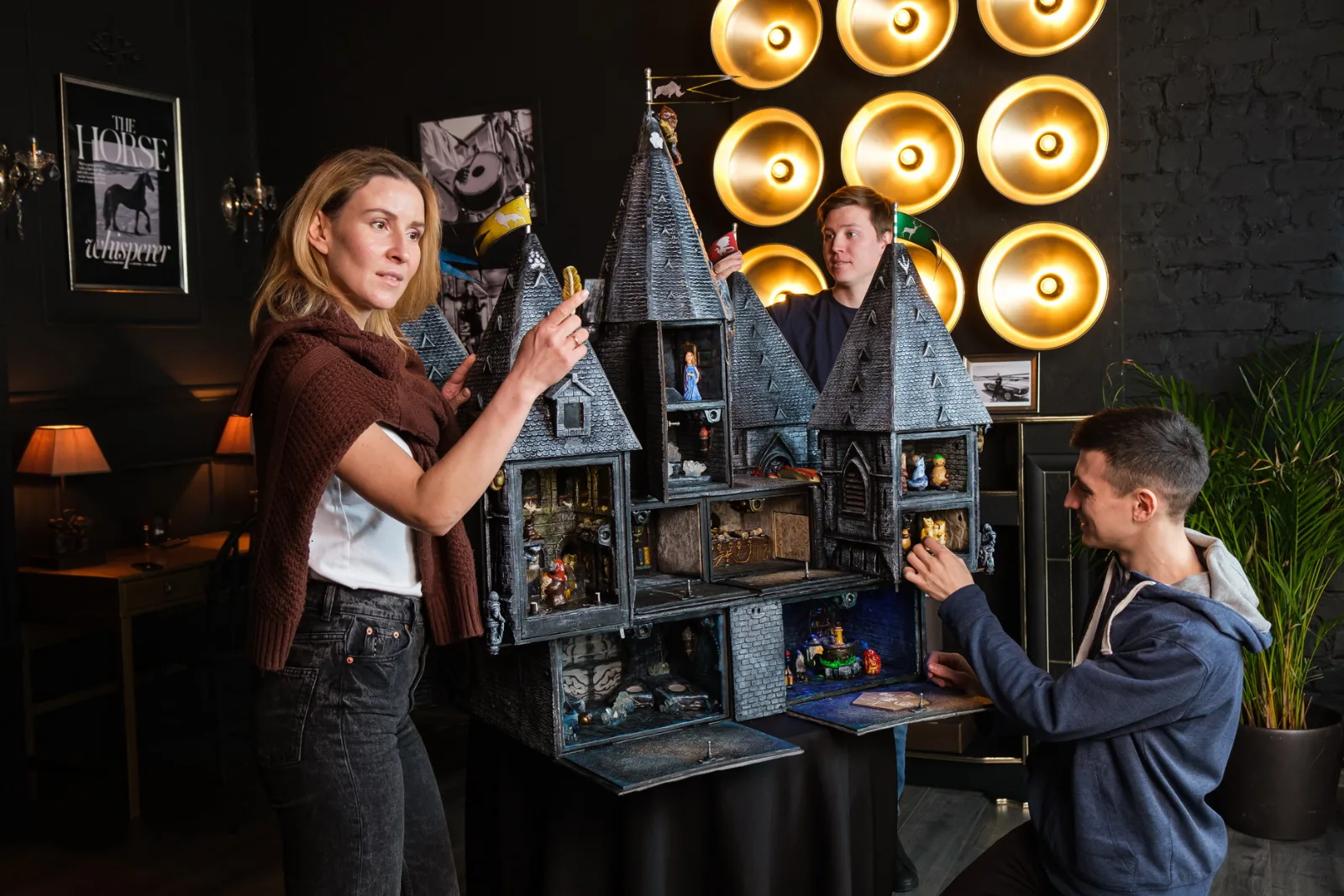
The tabletop format is Dead Man’s Chest, the very one played in the Montreal bar, and Wizard’s Chest. For a separate room, there’s the castle. Get in touch and tell us about your venue - we’ll suggest a format and work out the economics with you using the calculator.
See the full lineup
Which escape room fits your venue?
Explore the products