Escape room electronics: how it works and what breaks
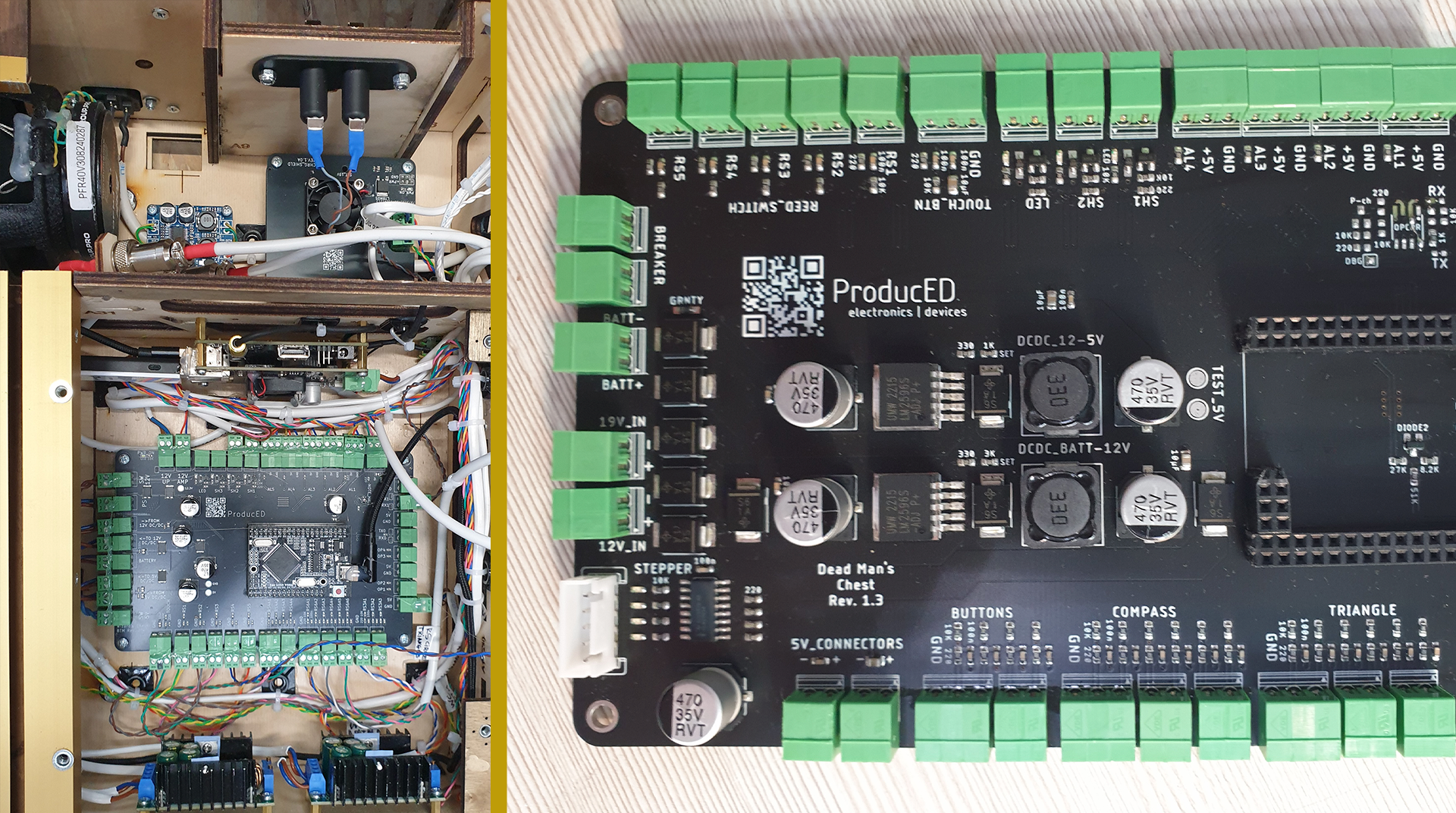
Electronics are the invisible half of an escape room. The guest sees a chest and hears a voice, but behind that sit three groups of devices: sensors, a controller, and actuators. When an owner picks the equipment, they are also picking - for years to come - how often it will break and who will fix it. Let’s take a quick look at what a room’s electronics are made of, what fails inside them, and how to tell a durable system from a flaky one.
What an escape room’s electronics are made of
Every automated room is built the same way. Sensors register what the player did: placed an object, turned a key, assembled a pattern. The controller checks this against the storyline and decides what happens next. The actuators carry out the decision: a lock opens a stash, lamps light up, a speaker delivers a line. Off to the side sits the host console - a screen that shows where the team is right now, and buttons to send a hint or reset the game. The fewer homemade parts in this chain, the less often it breaks.
What breaks - and why it varies from one supplier to the next
It’s usually not the “smart” part that fails, but a contact: buttons, mechanical limit switches, connectors, oxidized wire joints. That’s why a system’s durability is built in at the factory, not in the repair shop. Here’s what we do about it - and what’s worth asking any supplier:
- Boards are assembled by a robot, not a person. We order factory SMD-assembled boards: automated assembly removes the number-one source of defects in homemade electronics - hand soldering.
- Reed switches instead of mechanical contacts. Where a player places and removes an object thousands of times, we use a reed switch - a contactless sensor with no parts that rub and wear. It lasts many times longer than a mechanical button.
- Modules come apart. Every module can be removed and repaired on site, and if a module has reached the end of its life, it can be swapped for a ready-made one without touching the rest of the room.
- External devices run over Wi-Fi. Fewer cables during installation, and any device can be updated remotely without dismantling the set.
The right question to ask a supplier isn’t “does your electronics break,” but “what happens when it breaks.” An honest answer contains the words “spare parts,” “remote diagnostics,” and “turnaround time.”
Spare parts: why we plan years ahead
A kit ships overseas, and “send us a part” turns into weeks of waiting and customs duties. So we design with one question answered in advance: where will the client get the part in their own country?

- Standard components - from your local Amazon. Power supplies, sensors, speakers, and much more - we pick from what’s sold in any country: order it in the evening, swap it in the next day.
- Rare items - in the repair kit. Anything you can’t buy within a day, we pack into a spare-parts box before the kit ever ships.
- A non-repairable module - as a ready-made unit from us. This happens rarely, but even for that case there’s a procedure, not improvisation.
For buyers in the US this has become even more important: as of fall 2025, the duty-free threshold for parcels has been abolished, and every part from abroad now travels with a duty and a delay. Parts bought in the client’s own country sidestep the problem entirely.
Remote diagnostics: the person who designed it fixes it
The most expensive part of any breakdown is finding the cause. Our kits are connected to remote diagnostics: the engineer who designed the system sees its state from the workshop and tells you exactly which module to replace. The owner doesn’t need to understand electronics - they just need to be able to unscrew and screw back in. What this looks like in real stories - in our article on support, across five real cases.

Remote diagnostics won’t replace a multimeter. But it does replace hours of guessing “where exactly to point the multimeter” with a single precise answer.
Frequently asked questions
Does the venue need its own technician? For our kits - no. You need a person who can replace a module by following instructions; the diagnosis is made remotely.
How do shipping and duties work with you? The kit travels by air freight; we arrange delivery to the airport or to your door and help with customs clearance. Duties and clearance are on the buyer’s side and aren’t included in the kit price - that’s fairer, because they differ in every country.
Will the electronics become obsolete before they pay for themselves? No. Physically, the electronics are the longest-lived part of the room: the props and set tire out sooner. When it’s time to refresh, you can change the story, not the hardware.
See the system in action
How all of this comes together into a finished attraction - the castle and the chests. On choosing a supplier with the right questions - a checklist. Or ask us directly - we’ll show you the console and diagnostics live.
See the full lineup
Which escape room fits your venue?
Explore the products